Today we woke up around 7AM to take a shower, get dressed, and have breakfast, as we had plans to visit the city of Jingzhou (in the Romance of Three Kingdoms era, it is the last city that Guan Yu ruled as a lord before being conquered by Lu Meng, Sun Quan’s grand marshal). We had booked train tickets for around nine o’clock, but we needed to reach Hankou Railway Station by eight-thirty because we had purchased the tickets through an agent and needed to collect the actual tickets at the station before boarding the train, which would take about 30 minutes. Around seven-thirty, we left the hotel to go to Xunlimen Station, the nearest metro station, which is a junction between Line 1 (blue) and Line 2 (pink). Once we arrived, we didn’t wait long. I quickly went to buy metro tickets from the automated ticket vending machine, which had an English menu available. The ticket price was 2 CNY/person (0.30 USD) for the entire line. It was incredibly cheap compared to our home. We took Line 2 (pink) and arrived at Hankou Railway Station after only five stations, taking less than 20 minutes. However, the metro system during the early morning rush hour was extremely crowded and chaotic.
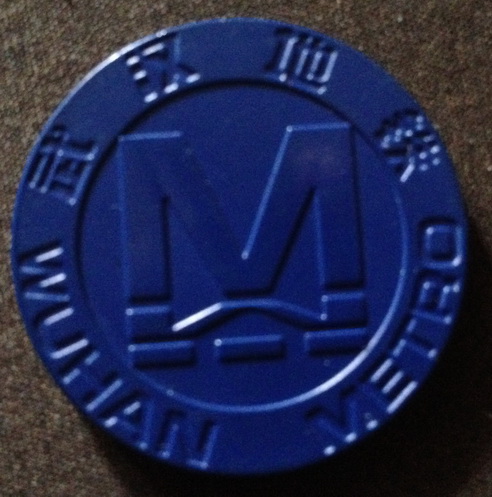
The metro token (ticket) at Wuhan
.
When we arrived at the train station around 8.15AM, we hurriedly searched for the ticket counter to exchange for actual tickets to board the train. The metro exit was connected to the underground level of the railway station, and the nearest ticket counter was located underground. We walked over to join the queue for ticket exchange, which took nearly 15 minutes before it was our turn. We handed the agent the ticket reservation documents we had obtained through the agency, along with our three passports. Unfortunately, the officer couldn’t speak English or communicate anything comprehensible, but one thing was certain: he couldn’t issue the tickets for us. (At that time, my mother wasn’t with us, so I had asked her to wait near the entrance of the boarding platform). Fortunately, there was a male officer who could speak English and he informed us that this counter wasn’t the main one for ticket issuance. Tickets purchased through the agency couldn’t be obtained here; we had to go to the main counter in front of the station. He kindly volunteered to guide me there. (He was such a lovely officer, with excellent service-mindedness.) We followed that officer and ascended to the upper level of the station, where the main ticket counters were located. We was extremely worried along the way because it was almost time for the train to depart. When we reached the upper-level counter, we discovered that our train was about to depart. The officer then took us to bypass the queue and happily handed us the tickets at 8.45AM.
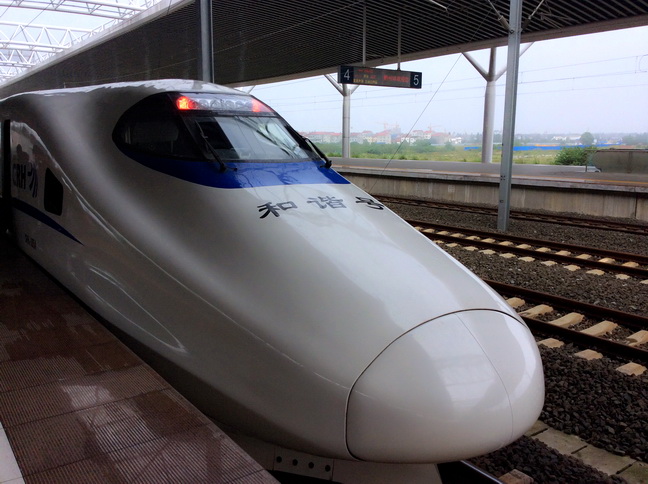
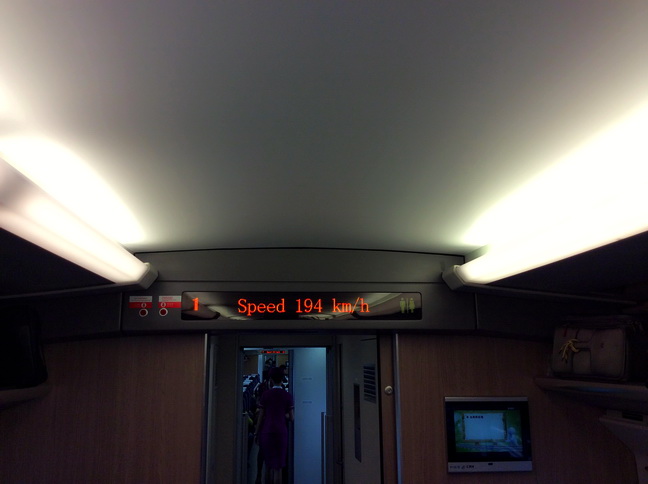
After getting the tickets, we sprinted to find our mother immediately, fearing that we might miss the train. We hurried to the platform, passing through the security checks smoothly, and went straight to the platform to wait for the train. When we arrived there, we still had about 10 minutes before the train departed, so we had enough time to use the restroom and freshen up. The men’s restroom, as advertised, reeked of heavy cigarette smoke, while my mother told me that the women’s restroom seemed like it had been around for 60 years and had never encountered anything as unpleasant as this (I hope you can imagine the scene :-) ). Since we had booked First Class tickets, our queue was relatively short when boarding the train. Hence, we had some extra time to attend to personal matters (I had researched and learned that First Class tickets for Chinese trains were the best, not only for comfort but also to avoid the smell of cigarettes and the commotion, which was well worth it). We stood waiting for about 5 minutes, and then it was time to board the train. Let me tell you, this was a passing train that stopped at Hankou Station for only 5 minutes. My mother, who didn’t have the best mobility, found it quite challenging because she had to hurry to board the train. So, we made the decision to enter the Second-Class carriage to secure a spot on the train and then later find our way to the First-Class carriage. As we walked through the Second-Class carriage, luckily, we realized that our decision to travel First Class was correct because there were people smoking, playing cards on tables, and chatting loudly, among other things. It was different from First Class, which was much quieter and more private. When we reached the First-Class carriage, we sat in our reserved seats, and as soon as we settled in, the train departed immediately. The high-speed train in China only took about an hour and a half to reach Jingzhou Railway Station, which was approximately 250 kilometers away from Hankou Station. The maximum speed of the train was 194 kilometers per hour. The train ticket cost 110 CNY per person (approximately 16.50 USD), and we purchased the tickets through an agency. Some sources mentioned that if you could communicate in Chinese and bought the tickets directly at the counter, you could get a much cheaper price. Thinking about it, it would be nice if Thailand also had high-speed trains. Hopefully, I’ll have the opportunity to experience them soon.
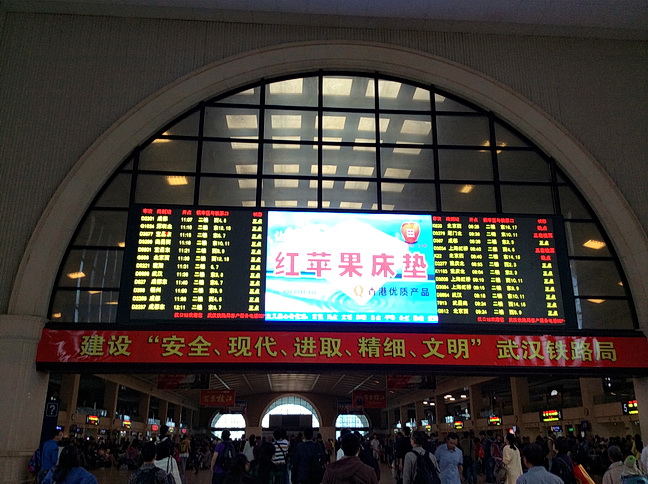
In front of Hankou Railway Station
.

Boarding Gate
.

The boarding platforms
.
.
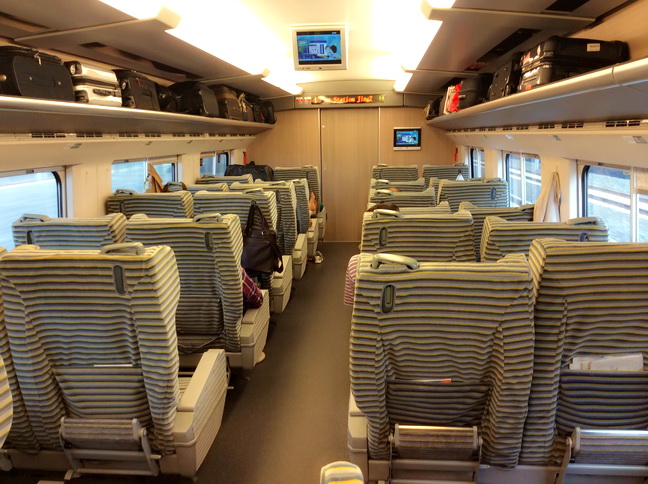
First Class Carriage and Seat…Very privacy :-)
.

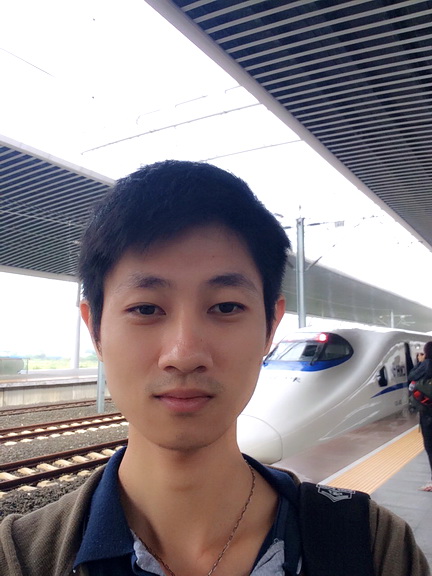
Jingzhou Railway Station’s Platform
.
.

.
After getting off the train at Jingzhou Station around half past ten, we managed to hire a taxi in front of the train station and head straight to our first destination for the day, which was the Jingzhou City Wall. Jingzhou, also known as Gengziu, was a strategically important city during the Three Kingdoms period. At that time, the territory of Jingzhou was approximately the size of Thailand. The warlords Liu Bei, Cao Cao, and Sun Quan all coveted this city because it served as the central point for all three forces. Originally, Jingzhou belonged to the warlord Liu Biao, but he was a weak ruler who lacked ambition. He was content with just holding onto the city and had no intentions of expanding his territory. Furthermore, his two sons, Liu Qi and Liu Cong, lacked intelligence and wit. When Liu Biao passed away, Liu Qi and Liu Cong fought over control of the city. In the end, it was Cao Cao who took advantage of the situation and used it as a stronghold to launch the Battle of Red Cliffs (the Battle of Chibi) against Liu Bei and Sun Quan, who temporarily allied themselves with each other. However, Cao Cao, being a northerner, was not familiar with naval warfare, and at that time, he boasted an army of only a hundred thousand soldiers. He easily underestimated Liu Bei and Sun Quan, but it didn’t turn out that way. With the combined forces of Sun and Liu, led by the brilliant strategists Zhuge Liang and Zhou Yu, Cao Cao’s army was eventually defeated and forced to retreat. After the Battle of Red Cliffs, Zhuge Liang used deception to trick Sun Quan into letting him take control of Jingzhou from Cao Cao, a position he held for several decades. Sun Quan harbored a deep grudge but had to suppress it because he didn’t have the opportunity to take Jingzhou back. Finally, when the golden opportunity came, it was Liu Bei, Zhuge Liang, Zhang Fei and Zhao Yun who embarked to Chengdu. Guan Yu had been left to rule Jingzhou alone. Lu Meng, the Supreme Commander of Sun Quan found the chance to revenge and made significant moves. Lu Meng was able to seize Jingzhou by using cunning tactics against Guan Yu, and he managed to capture Guan Yu and send him to Sun Quan for judgment. Sun Quan ordered the execution of Guan Yu and sent his head to Cao Cao as proof of his wrongdoing. Sun Quan hoped that such actions would lead Liu Bei to misunderstand and seek revenge against Cao Cao for ordering Guan Yu’s death. However, Cao Cao saw through the plot and arranged a proper funeral for Guan Yu, honoring him with dignity. Additionally, Cao Cao requested the Emperor to appoint Guan Yu as the “Prince of Jiangzhou,” making Guan Yu a symbol of honor for the city of Jingzhou from that moment onwards. It became the last city where Guan Yu served as a ruler during his lifetime.
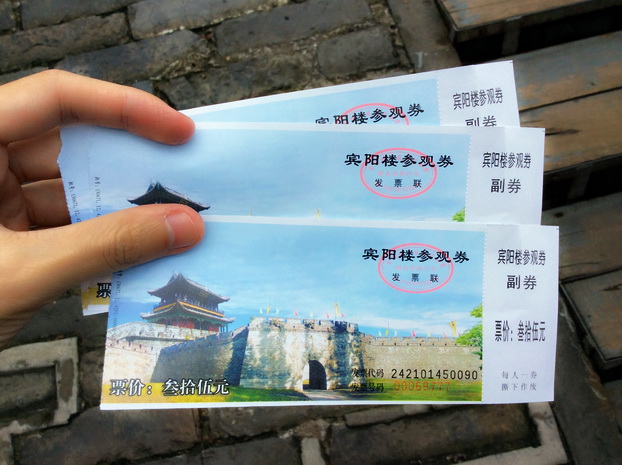
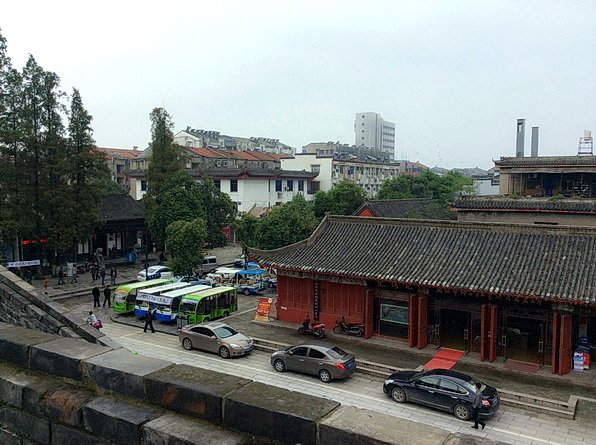
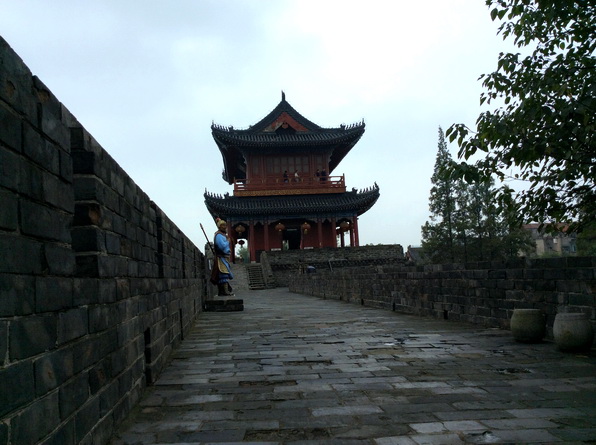
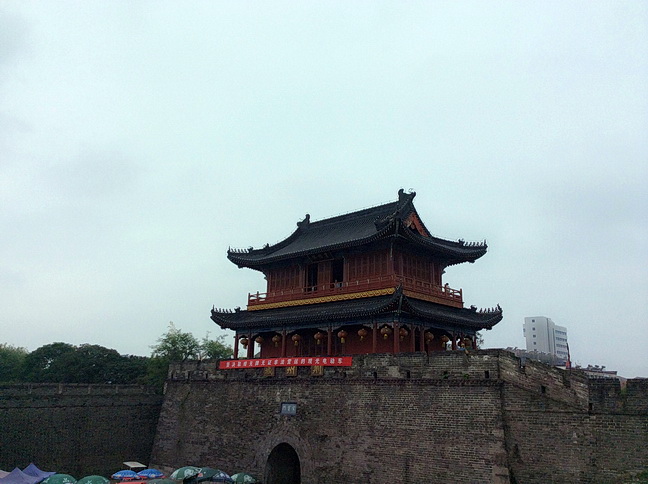
We took a taxi from the train station and arrived at the city wall of Jingzhou in about 15 minutes. The taxi driver took us directly to the ticket booth. As soon as we got off the taxi, it seemed like the ticket seller knew we were tourists and immediately offered us tickets. The ticket cost 50 CNY each (approximately 7.50 USD), and with this ticket, we could explore everything from walking on the city wall to visiting museums. After getting our tickets, we started walking along the city wall immediately. The city wall was wide enough for us to walk on and provided beautiful angles for photography, whether it was the view of the city wall itself or the panoramic view of the city and its surroundings. As for the observatory tower, it had been transformed into a medium-sized art exhibition space with souvenir shops.
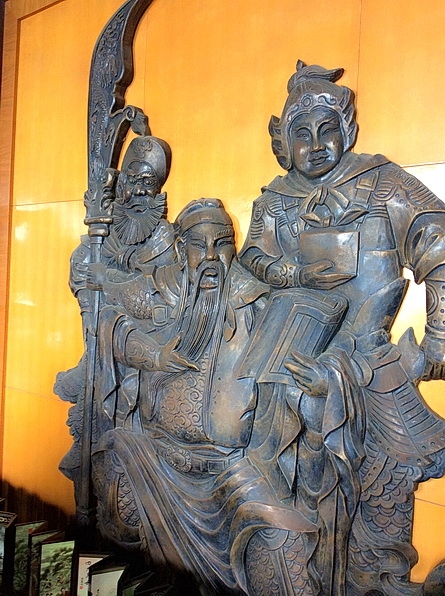
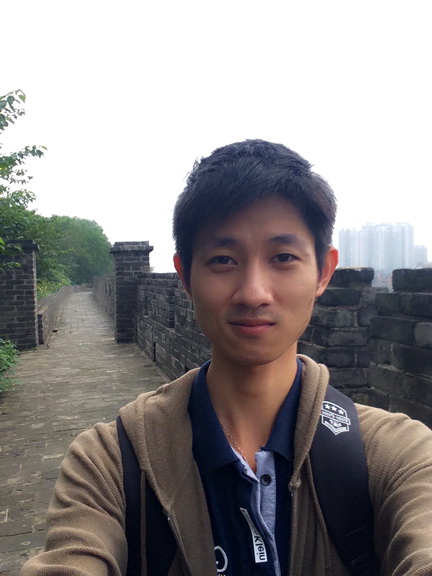
I mostly spent my time walking along the city wall, exploring the surroundings continuously. As for my mother, she couldn’t walk any further and decided to stay near the observatory tower. She said she couldn’t go on. As for my younger brother, they were the same as always, disappearing at some point, and I didn’t know when. While walking on the city wall, I felt like I was transported back to the Three Kingdoms era. The atmosphere and the preserved state of the city wall in Jingzhou resembled what I had seen in authentic Chinese historical films. Being someone who has read the Romance of the Three Kingdoms more than three times, I couldn’t help but imagine how immersed I could be. Inside the observatory tower, the highlights were the statues of the three brothers: Liu Bei, Guan Yu, and Zhang Fei, as well as Zhuge Liang. They symbolize that Zhuge Liang, who was the strategist of Liu Bei, was born and gained power in the city of Jingzhou, expanding his influence westward and eventually seizing control. As for the souvenir shops, I visited around three to four of them, but there was one that my mother specifically chose, a sign that said “Tang.” It was her surname, and she suggested that I carry it with me according to Chinese beliefs.
.
.

.

.
.
.

The statues depict the characters Liu bei, Guan Yu, Zhang Fei, Zhai Yun and Zhuge Liang
.

.
.

.
We spent nearly two hours at the walls of Jingzhou. Around lunchtime, we started feeling hungry and decided to walk around the area to find something to eat. After walking about 200 meters towards the entrance of the city, we stumbled upon a small Chinese restaurant that also served as a small hotel. It looked clean and newly renovated, so we decided to check it out. However, the staff only handed us menus, all written in Chinese (probably not expecting foreign visitors). My mother took charge of ordering and quickly sent me the menu. We ordered three dishes: crispy fried lotus root, spicy alkaline egg salad, and stir-fried pork belly with garlic. Each dish had a spicy and flavorful taste, even the fried lotus root was spiced with various seasonings. The bill came to around 90 CNY (approximately 13 USD), and we enjoyed every bit

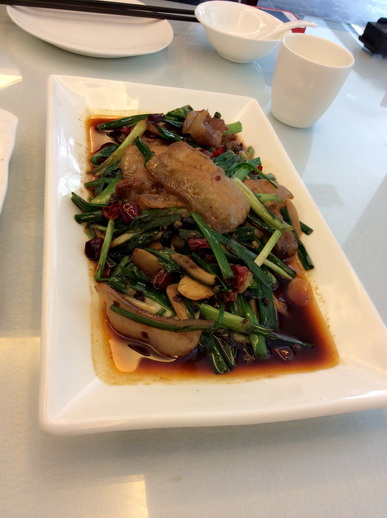
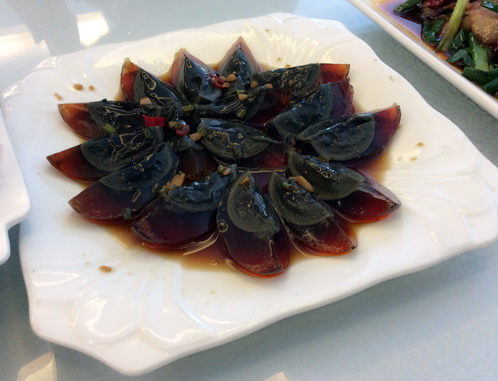
Our Lunch at Jingzhou :-P
.
After satisfying our appetites, around 1.30PM, we were ready to head to our next destination, the Guan Yu Temple, which was located about 2 kilometers away. We hailed a taxi right in front of the restaurant where we had just savored the spicy and flavorful dishes. It took us approximately 10 minutes to reach the Guan Yu Temple. The temple was conveniently situated right next to one of the city gates and offered free admission for visitors.
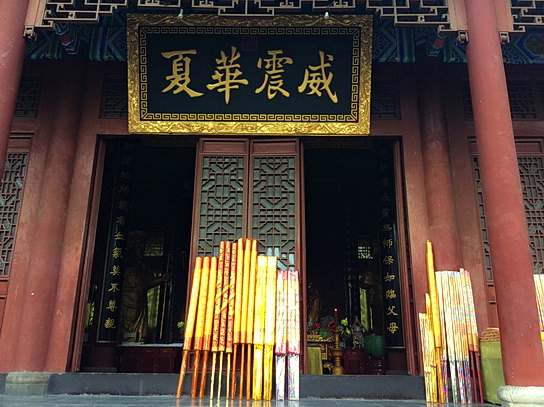
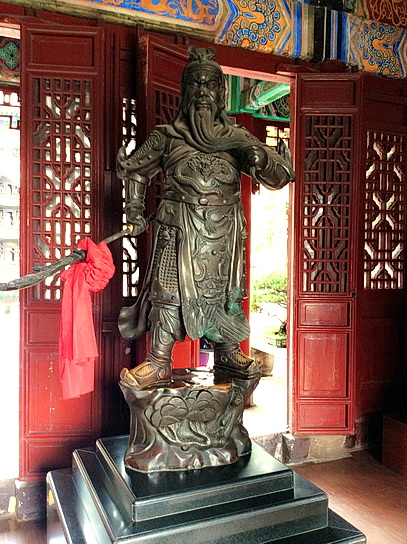
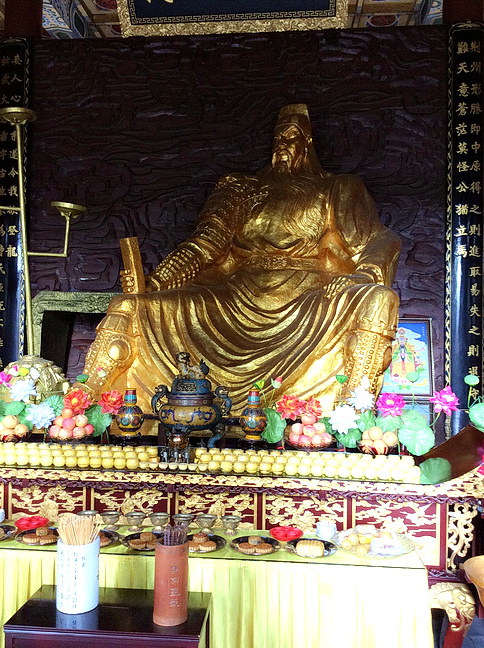
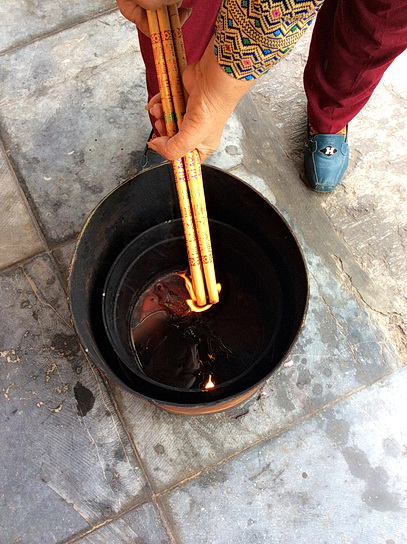
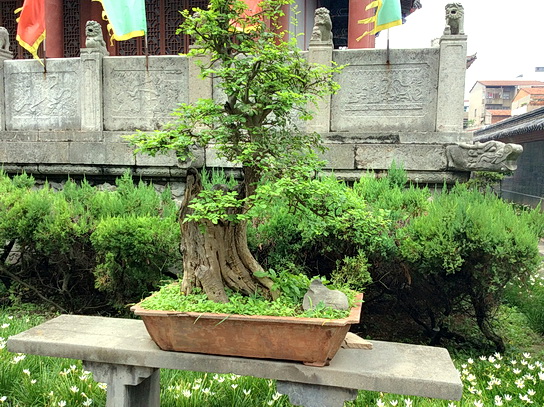
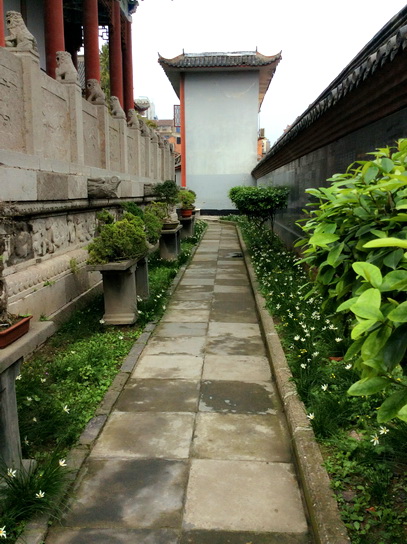
This Guan Yu Temple is a small temple divided into two sections. The front section houses a large seated statue of the revered deity Guan Yu. My mother told me that this particular statue of Guan Yu looked awe-inspiring, powerful, and exquisitely beautiful. She instructed me to take some beautiful photos of it to later frame and display in our home, hoping to bring us luck, blessings, and perhaps some winning lottery numbers (on certain occasions). I took photos from various angles, and my mother helped me choose the best ones. After a while, we noticed a table where temple staff were conversing with my mother, explaining the rituals and practices of worshiping Guan Yu (in simple terms, they were selling items). The staff member demonstrated that worshiping Guan Yu could be done by offering three large incense sticks and reciting prayers for blessings. The cost of the incense sticks depended on our devotion, so I contributed 50 CNY (approximately 7.50 USD) as an act of merit. Once we had paid our respects to Guan Yu, we proceeded to the back section of the temple, which was another shrine. Here, the statues of the three brothers : Liu Bei, Guan Yu, and Zhang Fei, were displayed. The surrounding area was adorned with a small tranquil garden, perfect for leisurely walks and relaxation.
.
.
.
.

.
.
.

.

.
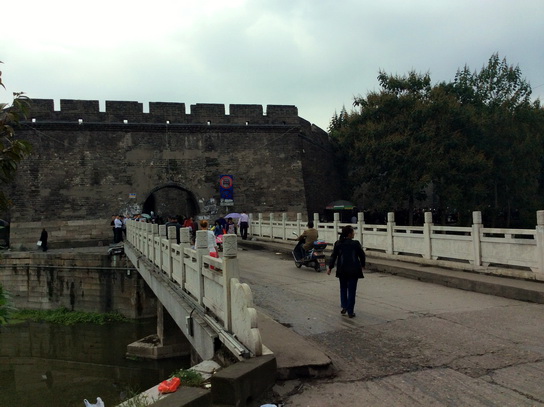
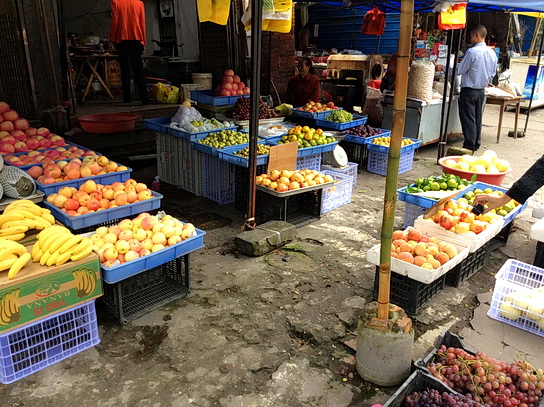
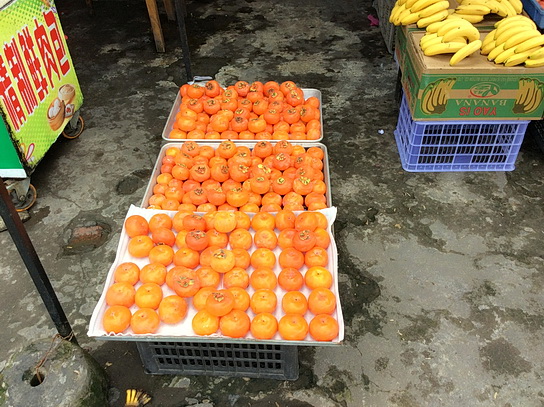
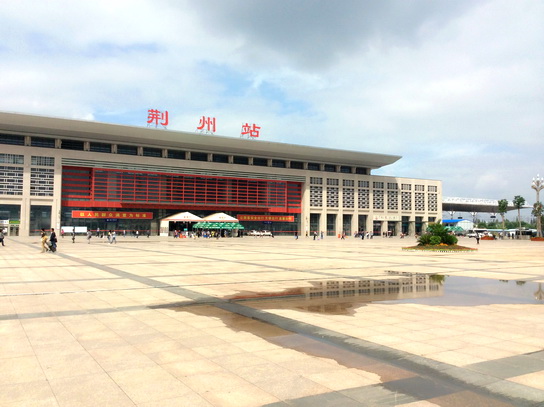
We spent about half an hour taking photos and exploring the Guan Yu Temple before stepping out to continue our leisurely stroll towards the city gate, conveniently located right in front of the temple. We had booked a train for 4PM to return to Wuhan, so we had plenty of time to casually explore the city. This side of the city gate was bustling with shops and a lively market. It was also a major thoroughfare for the locals, giving us a glimpse into the daily lives of the people in central China. We marveled at the variety of goods being sold in the market; overall, it was quite fascinating for us. We took approximately 30 minutes to walk from the city center to the end of the market, which led us to a main road. By then, it was around 3.30PM, the perfect time for us to bid farewell to Jingzhou and head to the train station. We hailed a taxi right there to take us to the Jingzhou Railway Station. The taxi ride took no more than 20 minutes, and soon we arrived at the train station. We still had a little time left, so we took some photos and strolled around to admire the beauty of the station square and the nearby shops, exploring anything intriguing before boarding the train.

.
.
.
.

.

.
When it was time, we entered the train station to board the train. The high-speed trains in China are known for their punctuality, and true to form, the departure and arrival times were right on schedule, without a minute’s delay. We spent about an hour and some minutes traveling to the Hankou Railway Station (Wuhan Station). We arrived there around 5PM. From there, we took the metro back to Xunlimen Station, near our hotel, the same station where we had disembarked in the morning. However, our adventures were not over yet. Since the sky had cleared and dusk had set in, it was the perfect time to experience the vibrant atmosphere of Jianghan street, a bustling pedestrian street at night. We couldn’t miss the opportunity to immerse ourselves in the fascinating ambiance of this famous nighttime destination.
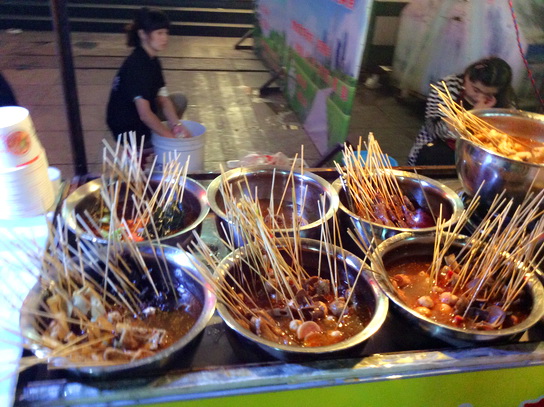
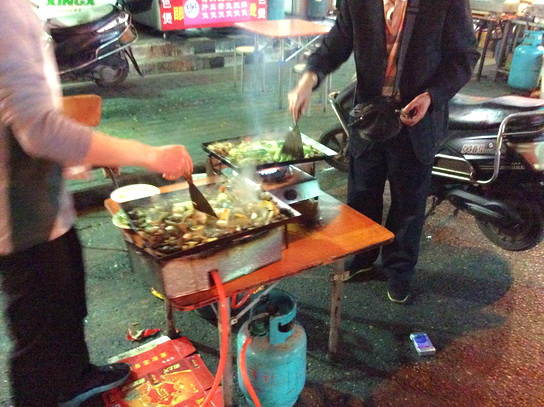
From Xunlimen Metro Station, when we walked down and exited on the Jianhan street side, we immediately encountered a bustling pedestrian street. We strolled in without hesitation because we were excited to see and, to be honest, we were starting to feel hungry (probably more so because of the latter reason :-) ). The main products people were selling on Jianhan street were mostly food items, including pastries, main dishes, clothing, and various souvenirs. However, the most vibrant and aromatic goods among them all were the street food options, which showcased the rich flavors and enticing aromas that China is famous for. We tried several things that we thought were exotic (but believed to be safe to consume). For example, we had fried fresh milk, which resembled fried tofu with a creamy and delicious sweetness, dipped in a batter and deep-fried. I also couldn’t resist trying the KFC located on Jianhan street (my goal whenever I visit any country is to try the local KFC if possible, and ideally, I would try it in every country worldwide if given the chance). However, the taste of KFC here was quite different, as the seasoning had a real hint of Chinese spices, making it distinct from the usual fried chicken flavor.
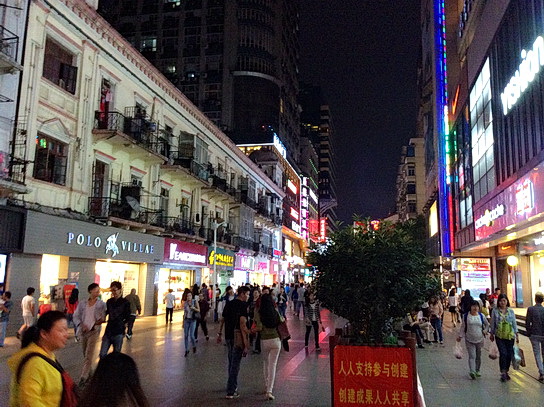
The Jianghan Walking Street at nigh
.

.

Frying Milk
.
.

.

.
We spent a satisfying amount of time walking along Jianhan street until we were full. It felt like we had accomplished our mission (which proved that we were motivated by hunger). Around 8PM., we made our way back to the hotel to freshen up and relax. Today was another day where I felt truly happy to be traveling with my family, even though we weren’t complete with my dad and youngest sibling missing. I hadn’t felt this way in a long time, more than 10 years, since it seemed like we never had the opportunity to travel together as a family. Everyone had different schedules and couldn’t align. But this trip allowed me to feel like I had gone back to being a child. It brought back memories of when we used to travel together, and today was another tiring yet fulfilling day for me. :-) Good night !
:::::::::::::::::::::::::::::::::::::::::::
Written By : SHIPY SIWARIT TIASUWATTISETH
 Shipy-Ship
รบกวนถามนิดครับถ้าจะไปกำแพงเมืองเกงจิ๋วโดย ขนส่งสาธารณะจะเป็นไปได้ไหมครับจากสถานีรถไฟ ขอบคุณคับ
LikeLike
เท่าที่ทราบมีครับ น่าจะเป็นรถเมล์สาย 24 (ไม่มั่นใจ)
แต่ค่าแท็กซี่ก็ไม่แพงครับ ตอนนั้นผมไปกับแม่เลยสะดวกแท็กซี่มากกว่า
LikeLike
รบกวนหน่อยค่ะ ไม่ทราบว่าหากจะไป “ผาแดง” จากอู่ฮั่น เดินทางไป “ผาแดง” อย่างไรค่ะ + แล้วสามารถเดินทางไป-กลับ ได้ในวันเดียวกันไหมค่ะ / ขอบคุณค่ะ
LikeLike
ไปผาแดงหรือ ซื่อปี๋ ผมไม่มีข้อมูลจริงๆ ครับ
ต้องขอโทษที :-(
LikeLike
Laura Gren
LikeLike
Laura Gren
LikeLike
Laura Gren
LikeLike
Laura Gren
LikeLike