Of course, I live in Bangkok! As a Thai ID card holder, I believed I had visited nearly every tourist destination in the capital of Thailand. However, my previous explorations were nothing more than casual hops from place to place. Then, one day, the idea of visiting 9 temples on Rattanakosin Island popped into my mind. Without any hesitation, I decided to dedicate a weekend day to fulfilling this mission.
Bangkok boasts almost 500 temples. However, I chose to focus on the temples in Rattanakosin Island due to their close proximity to each other and mostly accessible on foot. Moreover, the temples in this area showcase distinctive architecture and are situated in a tourist-friendly district, easily accessible by public transportation.
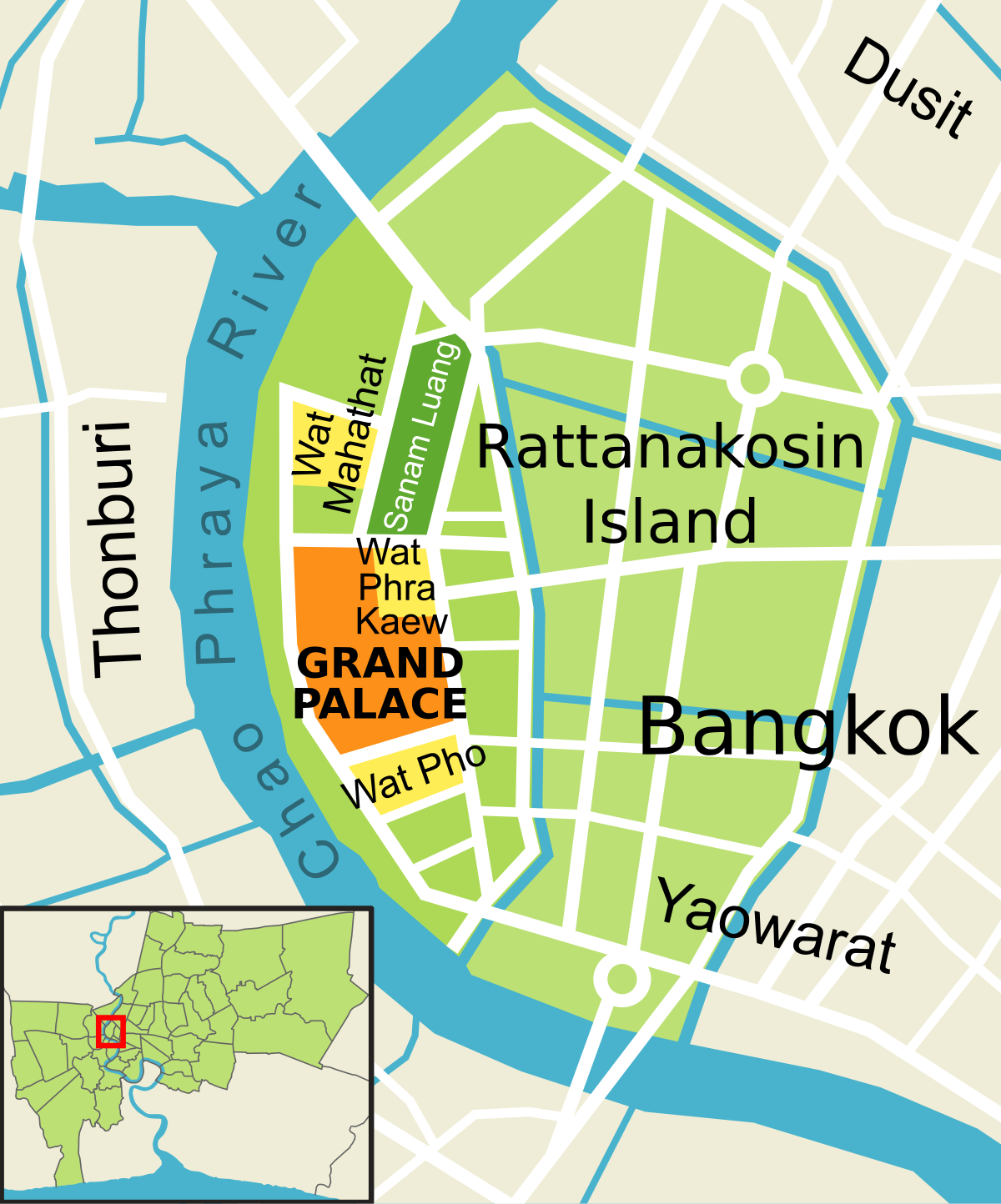
Rattanakosin Island – The historic district of Bangkok
.
I began my day around 9:30 AM by taking the subway (referred to as the “MRT” in Bangkok) to Sanam Chai Station. Upon arriving at 10 AM, I used Exit-1 and set off on foot towards my first destination.
.
Wat Phra Kaew & The Grand Palace (Thai : วัดพระแก้ว – พระบรมมหาราชวัง)
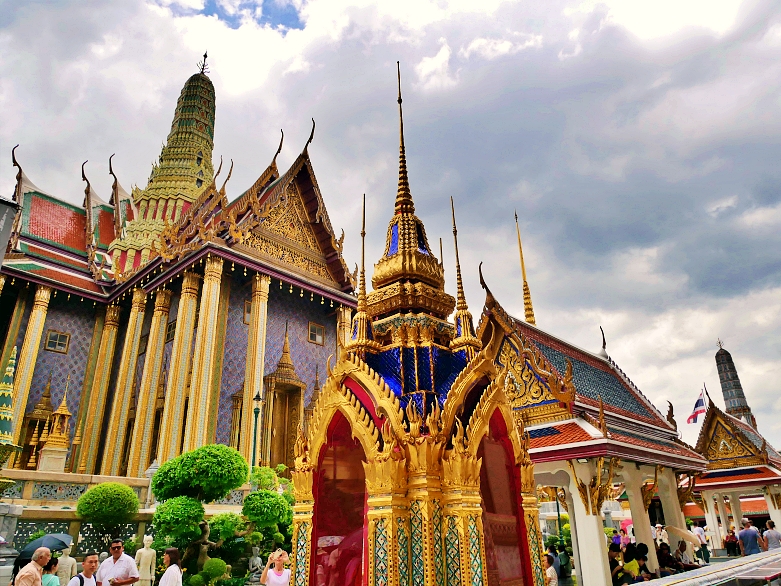
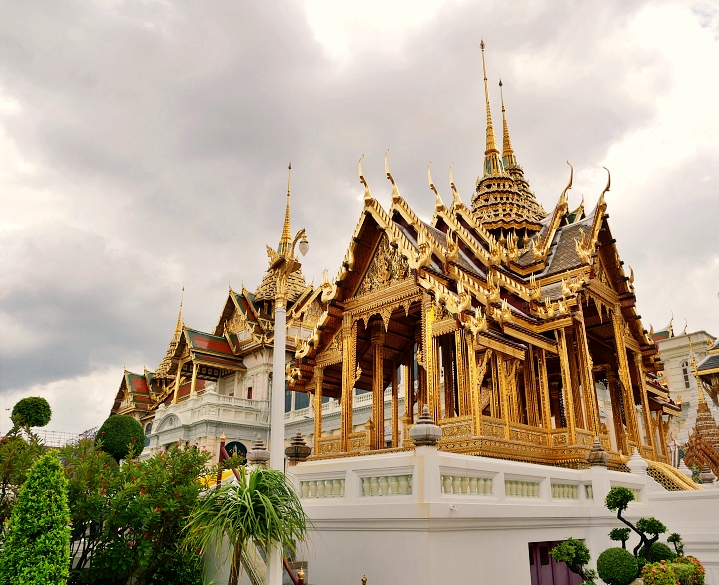
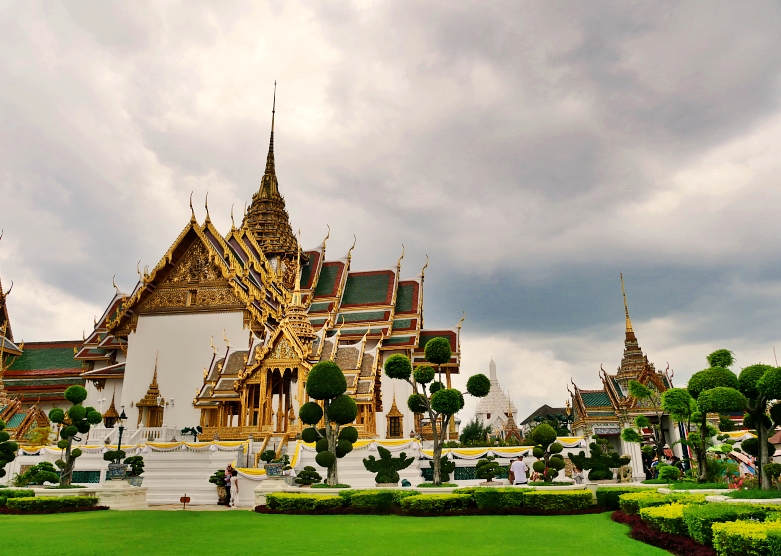
It is 15 minutes walk from Sanam Chai MRT station. The Grand Palace serves as the official residence of the Kings of Thailand. Its construction was initiated in 1785 along the banks of the Chao Phraya River. The palace complex takes on a roughly rectangular shape and covers an expansive area of 218,400 square meters, enclosed by four walls. Comprising numerous buildings, halls, and pavilions situated amidst open lawns, gardens, and courtyards, the Grand Palace stands as a remarkable testament to Thai architectural prowess.
Nestled within the same premises is the Temple of the Emerald Buddha (Wat Phra Kaew), widely regarded as Thailand’s most sacred Buddhist temple. The temple complex features diverse structures designed for specific religious purposes, each exhibiting distinct Thai architectural styles, alongside intricate wall paintings depicting the life of Buddha.
A visit to Wat Phra Kaew and The Grand Palace stands as a quintessential highlight of both Thailand and Bangkok, an experience no visitor should miss. Operating hours are from 8.30AM to 3.30PM daily. For foreign visitors, an entrance fee of 500 THB per person (15 USD) applies. Photographing and filming in ordination hall where the emerald Buddha is are prohibited.

.

.

.
.

Emerald Buddha (Source : https://www.thaizer.com/the-emerald-buddha)
.

.
.
.
I spent around an hour exploring and strolling through Wat Phra Kaew and The Grand Palace, while also taking in the splendor of the Emerald Buddha. Following that, I proceeded to the next temple, which happened to be situated around the corner.
.
Wat Pho (Thai : วัดโพธิ์)
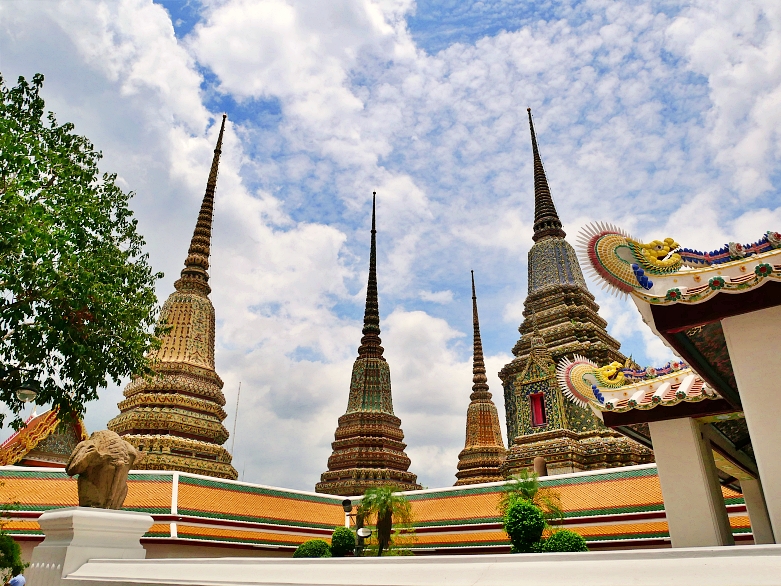
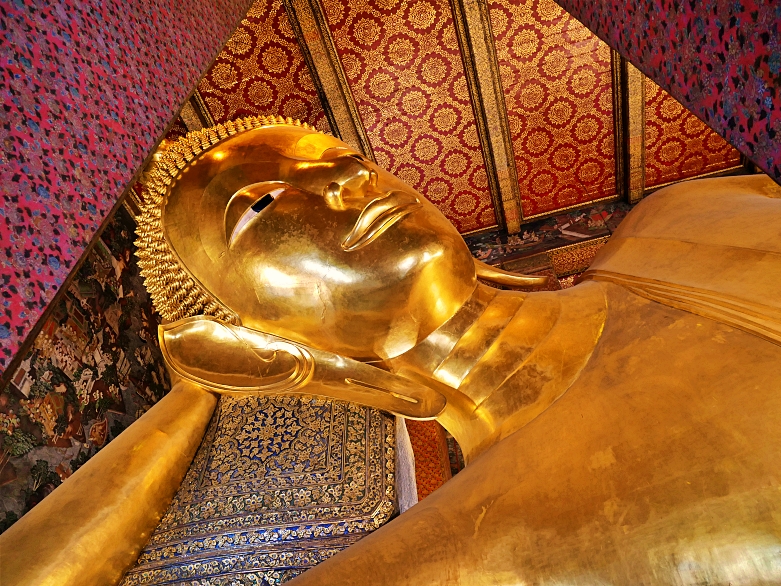
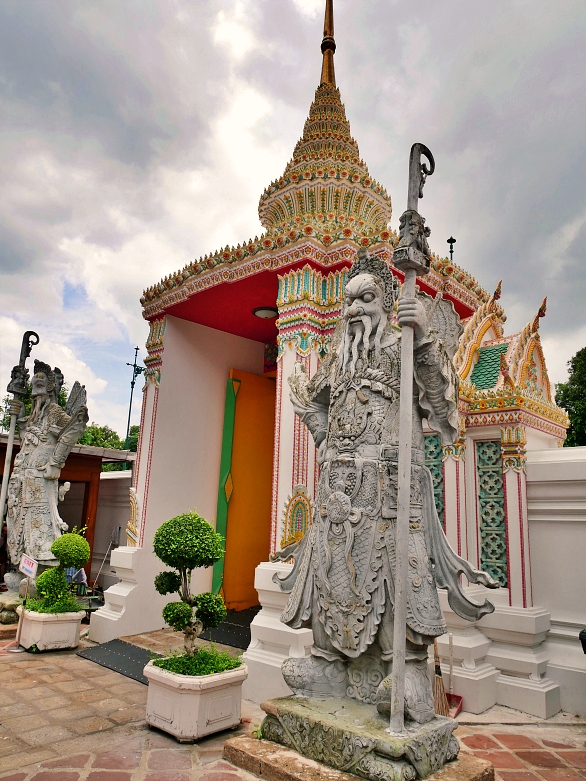
Just a 10-minute walk from the Grand Palace, this temple is also known as Wat Phra Chetuphon Wimon Mangkhalaram (Thai: วัดพระเชตุพนวิมลมังคลาราม). As a first-class royal temple and an ancient site, it holds a significant place in history. The temple complex boasts a reputation for its 46-meter-long reclining Buddha, along with the largest collection of Buddha images in Thailand. It was constructed by an unknown founder in the 16th century, preceding the establishment of Bangkok.
During the reign of King Rama III, the temple underwent extensive renovations and the King introduced various academic texts in diverse fields to be inscribed around the temple, aiming to spread knowledge among the people. Wat Pho is open daily from 8AM to 6.30PM. For foreign visitors, the admission fee is 300 THB per person (approximately 9 USD).
.
.

.
.
Wat Pho may not be as expansive as the Grand Palace, but it houses a wealth of captivating historical art and architecture. I dedicated 20 minutes to appreciating this temple before bidding it farewell and proceeding to the third temple of the day, which required crossing the Chao Phraya River.
.
Wat Arun (Thai : วัดอรุณฯ)
Departing from Wat Pho, I crossed the Chao Phraya River using the ferry at Tha Thien Pier (Thai: ท่าเตียน), a mere 3-minute walk from Wat Pho. The ferry fare amounted to a mere 5 THB per person (0.20 USD), and the crossing took only 5 minutes.
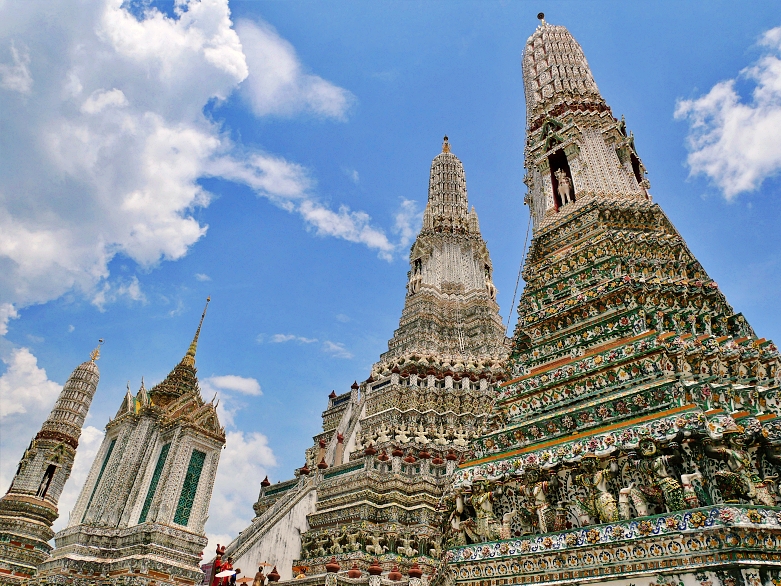
Wat Arun is a Buddhist temple located on the western bank of the Chao Phraya River. The temple dates back to at least the 17th century, and its distinctive prang (spire) was constructed in the early 19th century during the reigns of King Rama II and King Rama III. Notably, a substantial pagoda was also erected, standing at 82 meters in height and 234 meters in width. This pagoda serves as an iconic landmark along the Chao Phraya River in Bangkok, often featured in media representations. This temple open daily from 8AM to 6PM. It offers an insight into its rich history. For foreign visitors, the entrance fee is 100 THB per person (3.25 USD).

The ferry from Tha Thien Pier to Wat Arun
.

The Prang (Spire) of Wat Arun from distance
.

.

.
.
The temple consists of two main sections: the chapel and the pagoda. Within the pagoda, visitors have the opportunity to ascend and enjoy a panoramic view of the Chao Phraya River from Bangkok’s western bank, with the grand palace forming a majestic backdrop. I dedicated around 30 minutes to this experience before proceeding to the subsequent temples situated on the west bank of the river. To facilitate my journey to the next two temples, I purchased a boat package for those 2 temples at the pier located at Wat Arun.
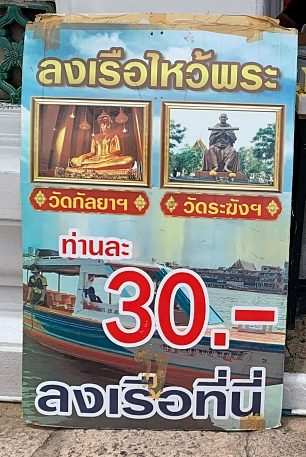

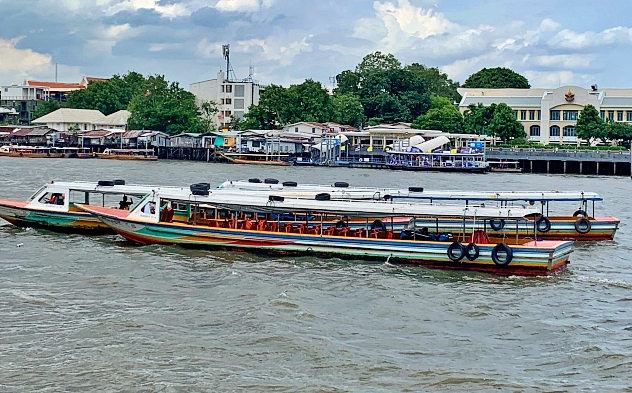
The boat ticket selling point / The Boat Ticket / The Boat to another 2 temples
.
Wat Kalayanamit (Thai : วัดกัลยาณมิตร)
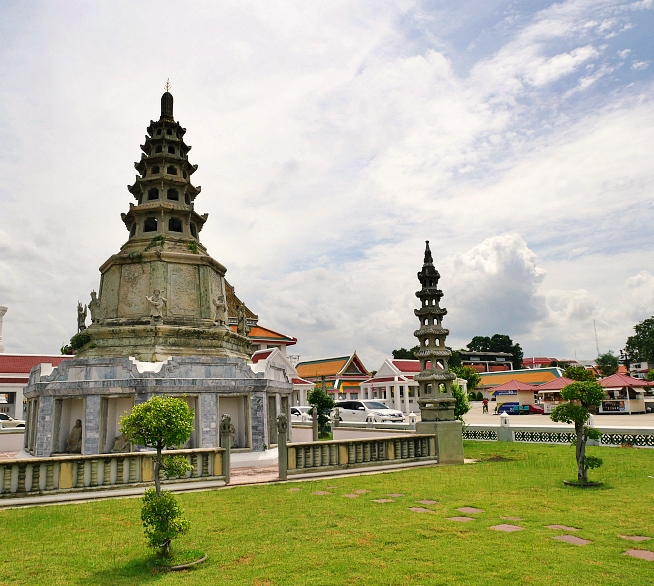
Within a mere 10-minute boat ride from Wat Arun, I reached the charming riverside temple of Wat Kalayanamit. Regarded as an invaluable gem of Thon Buri, this temple was erected in 1825 during the reign of King Rama III. It graces the banks of the Chao Phraya River at the mouth of the Bangkok Yai canal. Wat Kalayanamit boasts a harmonious fusion of Chinese and Thai architectural styles. Its premises showcase an array of chedis, pavilions, and statues, each reflecting both Chinese and Thai design influences.
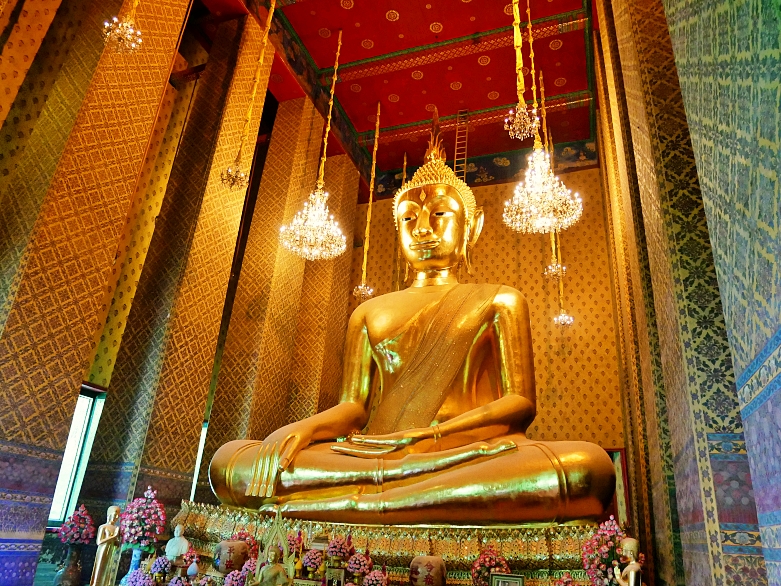
Inside the ordination hall, a magnificent 16-meter-tall statue named Luang Pho To commands attention – this sitting Buddha image is the largest of its kind in Bangkok. Scattered around the temple grounds are Chinese statues depicting animals, soldiers, and mythical creatures, adding to the unique ambiance of the place. This temple is free admission for any visitor.
.

.
.
After spending approximately 20 minutes admiring Wat Kalayanamit, I bid it farewell. Following that, I boarded the boat that I had purchased as part of a two-temple package ride, heading towards another temple on the western bank of the Chao Phraya River.
.
Wat Rakhang Kositaram (Thai : วัดระฆังโฆสิตาราม)
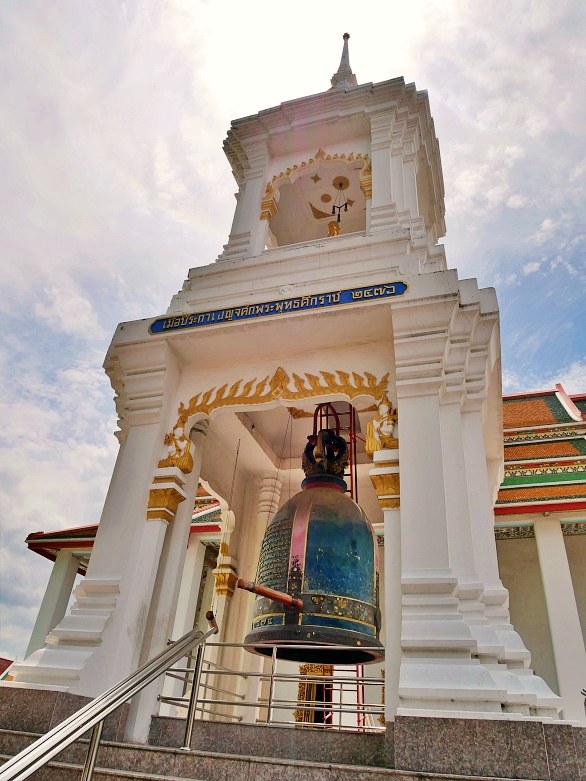
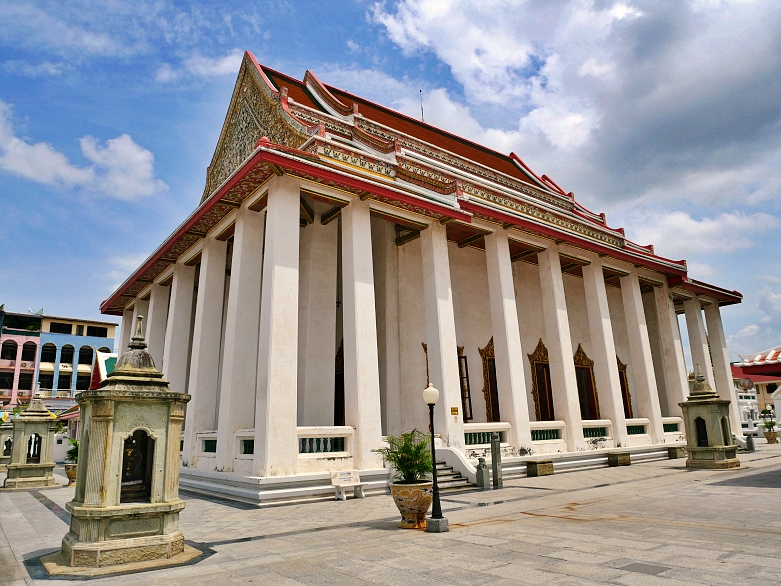
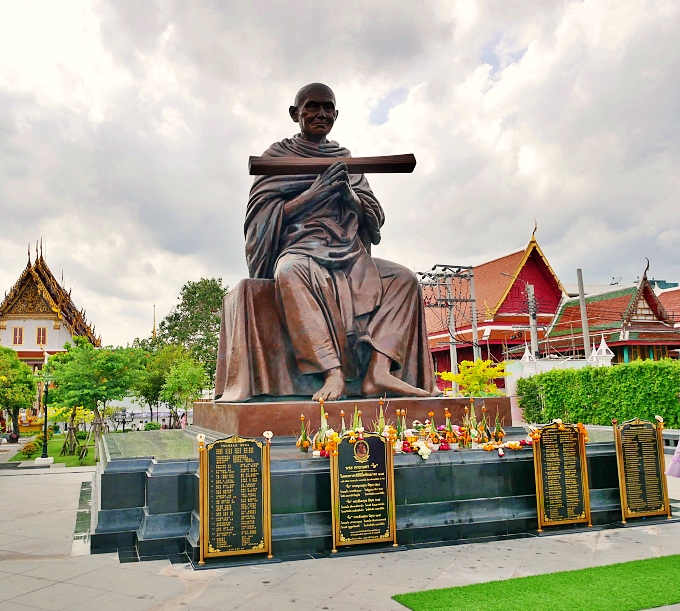
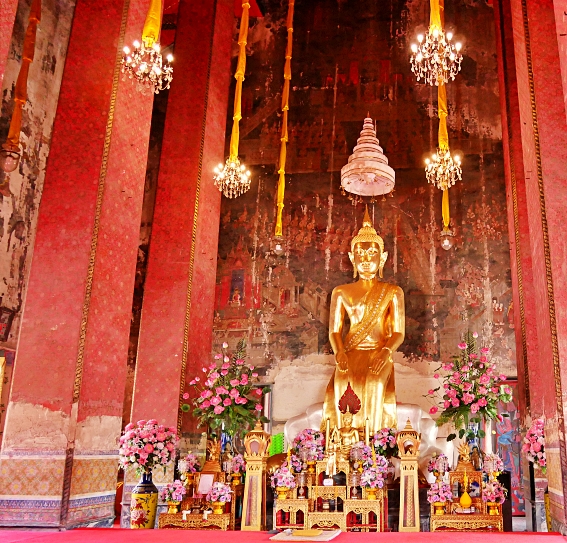
Following a fifteen-minute boat ride from Wat Kalayanamit, I arrived at Wat Rakhang Kositaram. This temple holds the status of a second-class royal monastery in Bangkok and dates back to 1767, originating from the Ayutthaya period. During the reign of King Rama I (1782 – 1809), a significant bell was discovered on the temple grounds, giving rise to the name of the temple (Rakhang means bell in Thai). This bell was subsequently moved to Wat Phra Kaew, the Temple of the Emerald Buddha, and in its place, King Rama I donated five new bells that remain suspended in the belfry (Ho Rakhang) to this day. Additionally known as The Temple of Luang Pho To, this site honors a revered monk who served as the temple abbot from 1852 to 1872, and who continues to be a focal point of veneration for temple visitors. The visit can admire this temple with free of admission fee.
.
.
.

.

.

.
.
I spent 20 minutes exploring Wat Rakhang Kositaram. Subsequently, I crossed the river once again, returning to the east bank of the Chao Phraya River. To make the journey, I utilized Wat Rakhang’s pier and disembarked at Tha Chang Pier (Thai: ท่าช้าง). The ferry fare for this trip amounted to 5 THB per person (0.20 USD). Afterward, I stumbled upon a traditional dining option for my (belated) lunch near this pier before proceeding to the next temple on foot.
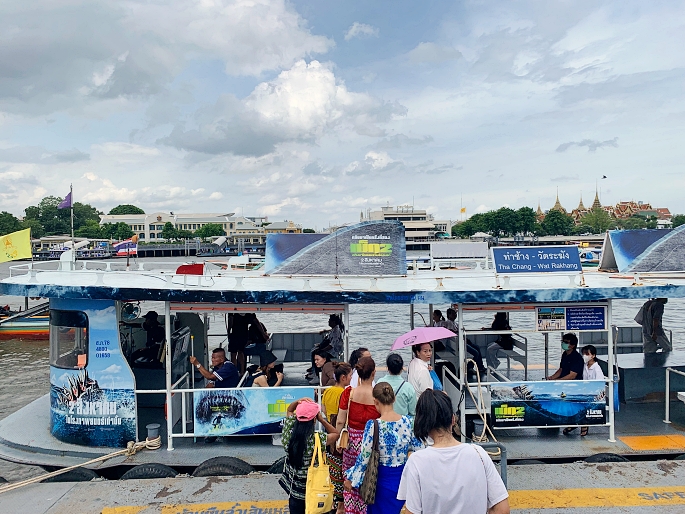
The ferry from Wat Rakhang to Tha Chang Pier
.
Wat Chana Songkram (Thai : วัดชนะสงคราม)
Sitting 1.50 km away from Tha Chang Pier, it takes around 20 minutes on foot to reach. If the distance feels too extensive for a walk, you can find motorbike taxis conveniently located near the pier. Opting for their service would typically cost around 30-50 THB per ride 1.00 – 1.50 USD).
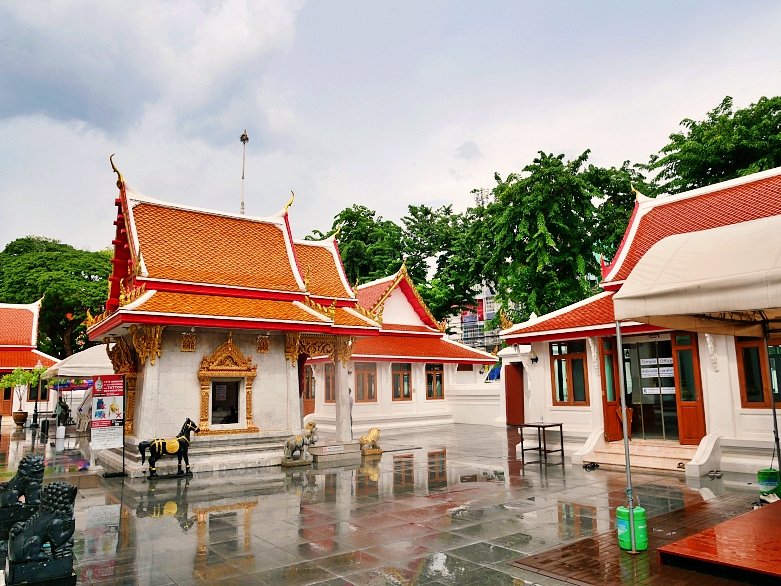
Wat Chana Songkram enjoys a close proximity to one of Bangkok’s renowned streets, Khao San Road (Thai: ถนนข้าวสาร). As an ancient monastery predating the initial Rattanakosin period (prior to 1782), its construction history remains elusive. Within the ordination hall (Ubosot), the altar stands strikingly adorned with a golden Buddha image, positioned before an expansive fan and ceremonial umbrella.
The temple grounds, adorned with Chinese-style shrines, create a spacious and serene ambiance, making it a tranquil haven in the midst of the city. It had no admission fee for any visitor.
.

.

.

.
I dedicated approximately 30 minutes to my visit at Wat Chana Songkram, which also included a leisurely stroll around the surrounding area, known for its popularity among tourists. At around 3 PM, I made the decision to proceed to the 7th temple of the day, considering I had roughly 3 hours remaining before sunset to successfully accomplish my mission of visiting all 9 temples.
.
Wat Bowonniwetvihara (Thai : วัดบวรนิเวศวิหาร)
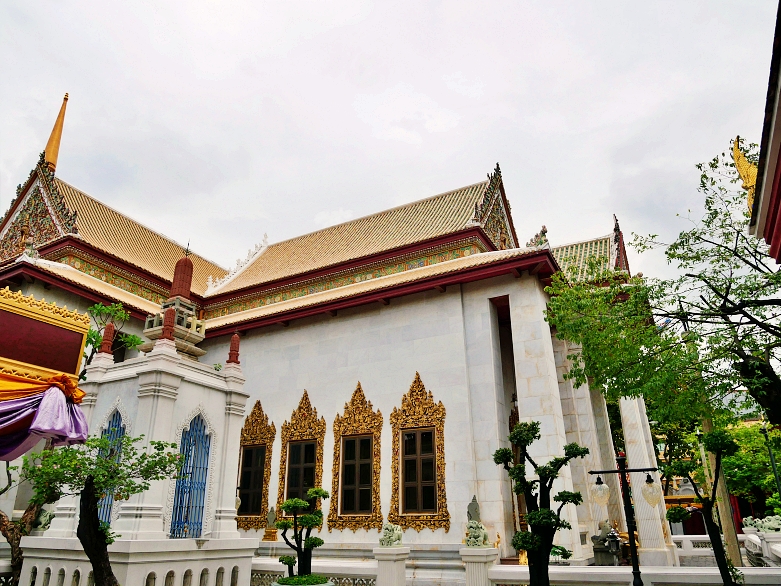
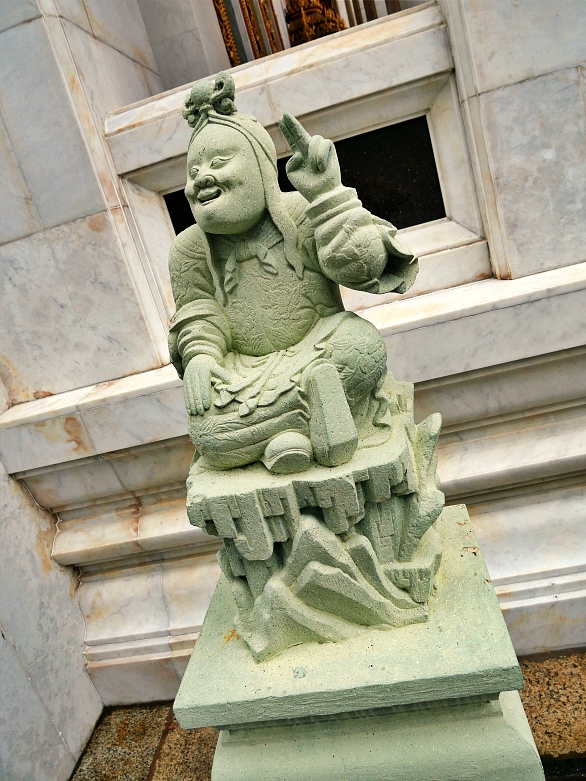
Approximately 700 meters away from Wat Chana Songkram, an intriguing temple awaits on Phra Sumen Road – Wat Bowonniwet Vihara. This significant Buddhist temple serves as the final resting place for two former Thai Kings: King Rama V and King Rama IX. Its establishment dates back to 1824, during the reign of King Rama III. Unique among other temples, this monastery features two main Buddha images, which is an exception to the tradition of having only one primary image per temple.
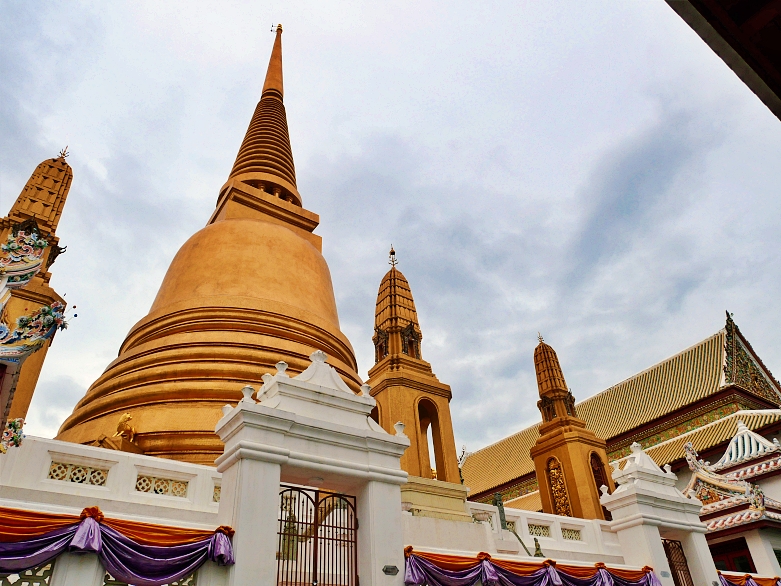
Adjacent to the ordination hall, the rounded Pagoda (Chedi) stands as a prominent feature. This immense chedi was constructed during the reign of King Rama IV and is adorned with gold-colored tiles. The temple stands open daily to visitors, offering free admission from 8 AM to 5 PM.
.
.
.
I took a leisurely stroll around this temple for about 20 minutes before continuing my journey on foot to the 8th temple, which is situated 1.50 km away.
.
Wat Sommanat (Thai : วัดโสมนัส)
I walked for 20 minutes from Wat Bowonniwet Vihara to reach this temple. Once again, if the 1.50 km distance feels too far, you have the option of using a motorbike-taxi, which typically costs around 30 – 50 THB/ride ( 1.00 – 1.50 USD). I arrived at this temple around 4 PM.
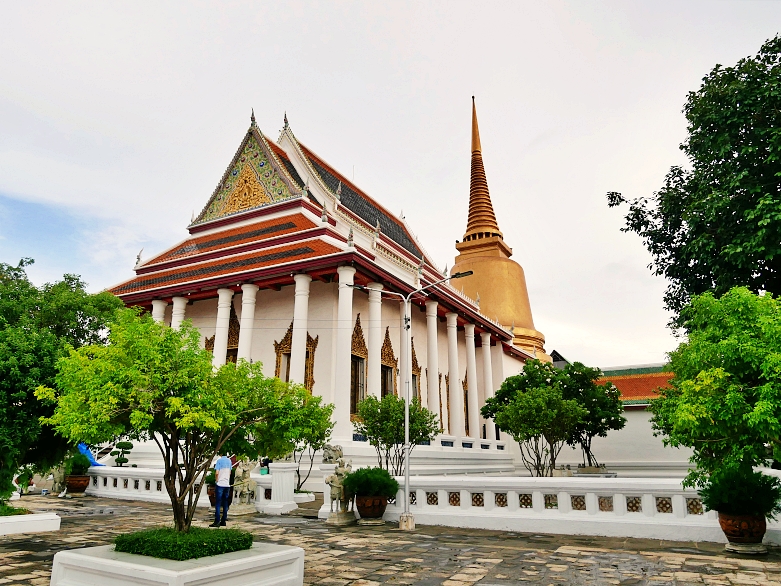
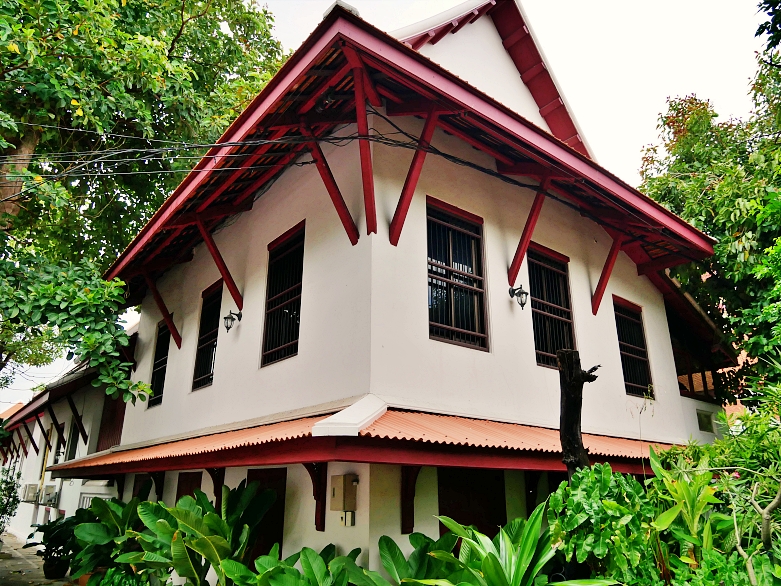
This temple holds the distinction of being a second-class royal Thai Buddhist monastery, constructed in 1853 by the order of Rama IV as a dedication and memorial to his first wife, Queen Consort Somanass Waddhanawathy, who tragically passed away at the age of 17. The temple is positioned near the Phadung Krung Kasem Canal (Thai: คลองผดุงกรุงเกษม).
The ordination hall of the temple is enclosed by two layers of traditional boundary walls, featuring an accurate and complete layout in accordance with the principles of Buddhism. Dominating the central area of the temple, a grand and striking golden stupa houses Lord Buddha’s relics. Wat Sommanat welcomes visitors daily, offering free admission.
.
.

.
At around 4.30 PM, I bid farewell to Wat Sommanat as I prepared to head to the final temple of the day, situated approximately 1 km away on foot. If you find the distance to be too extensive and are feeling fatigued, motorbike taxis are available as an option. These rides generally cost around 30 – 50 THB per trip (1.00 – 1.50 USD).
.
Wat Benchamabophit (Thai : วัดเบญจมบพิตร)
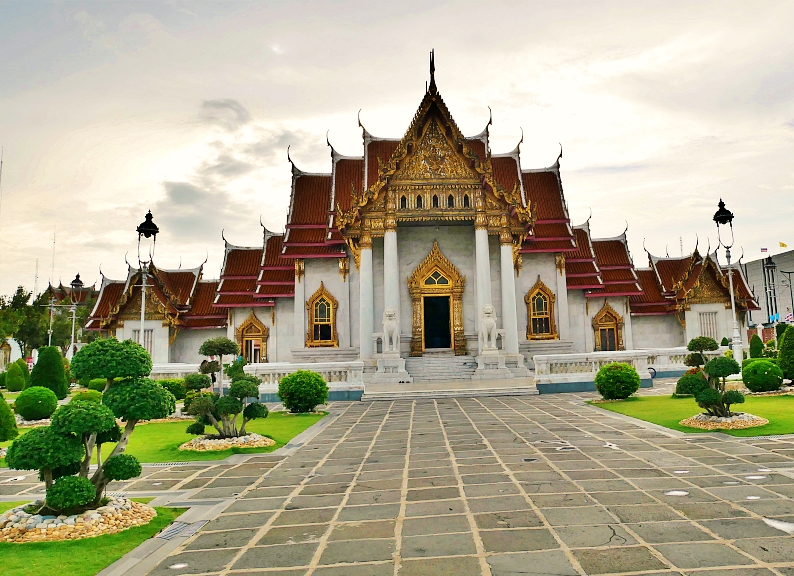
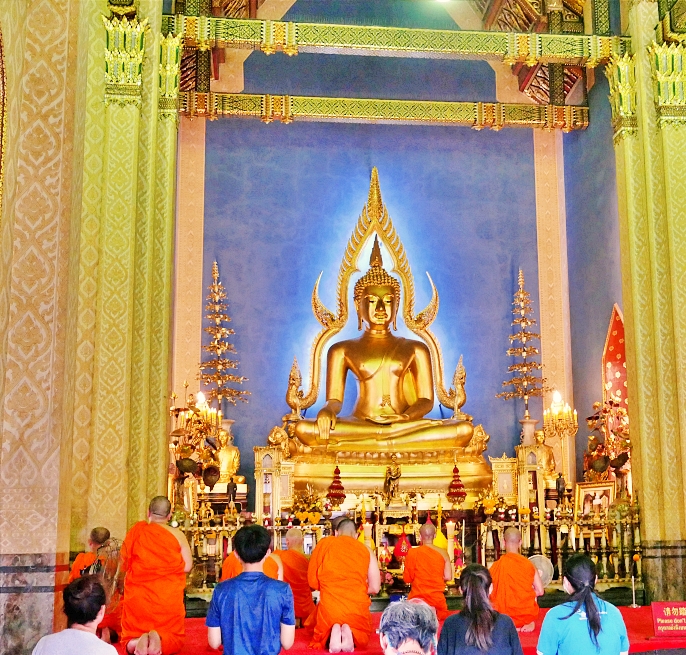
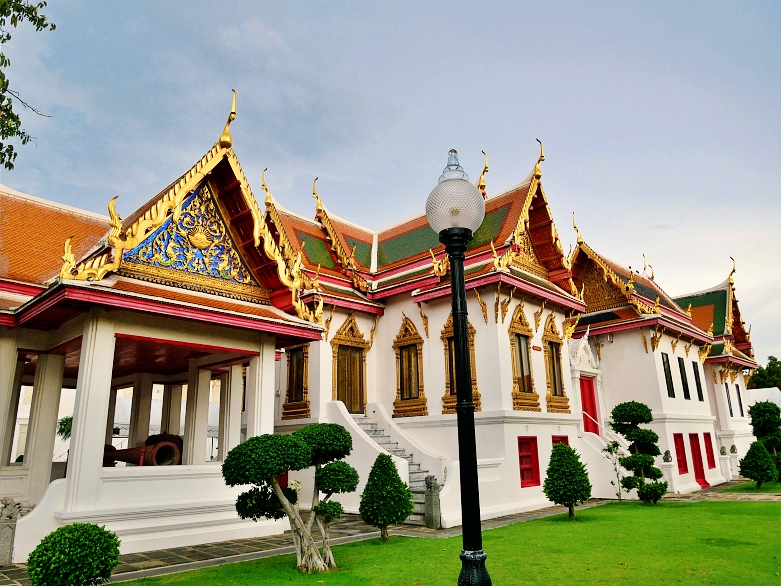
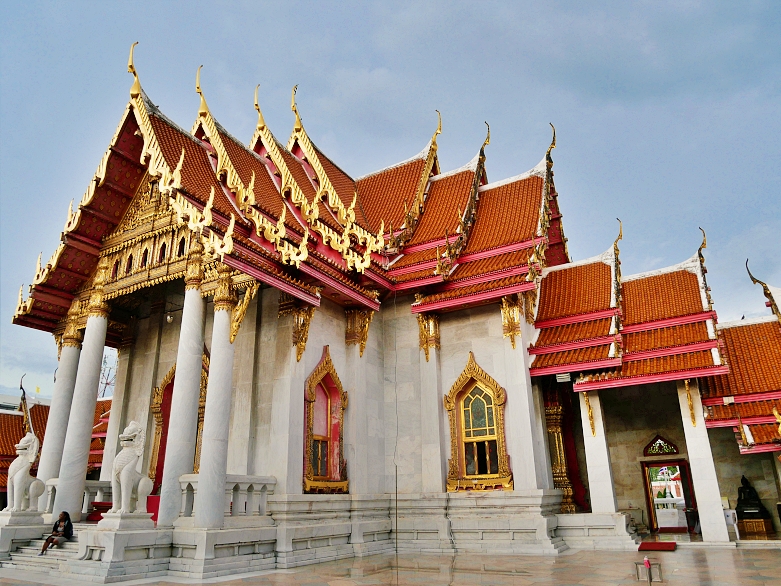
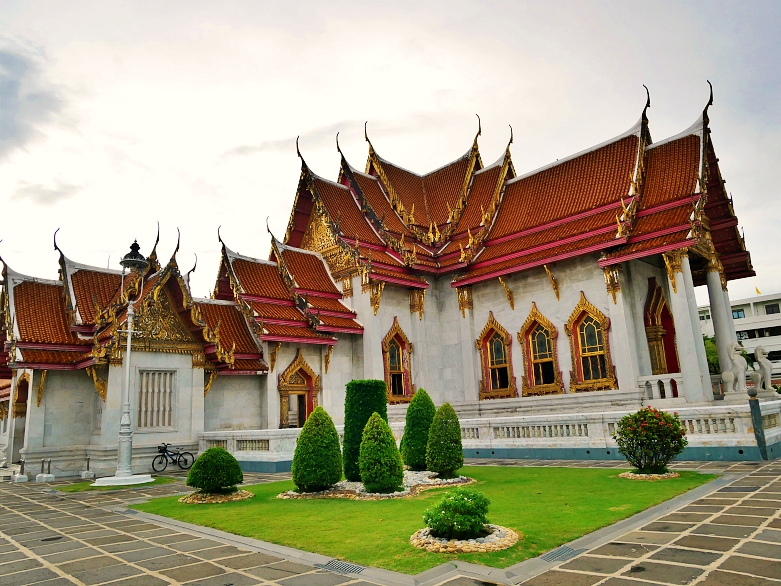
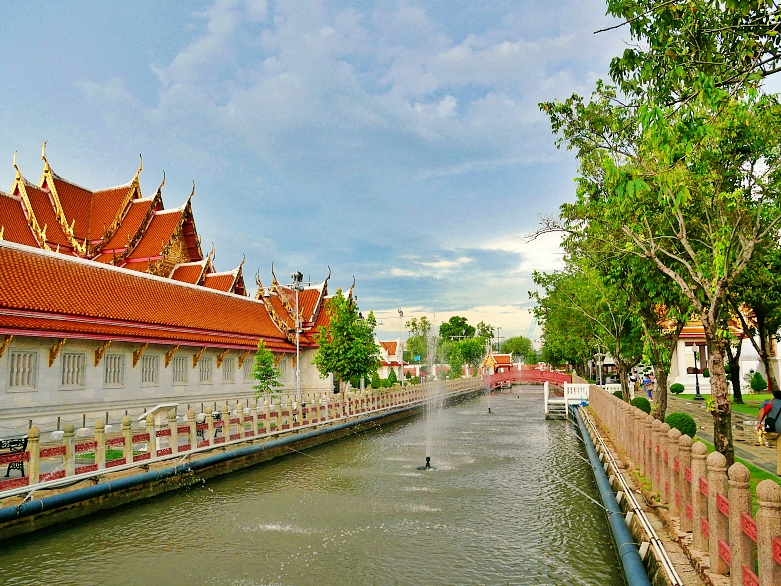
I arrived at Wat Benchamabophit around 5 PM. It is known as the Marble Temple, Wat Benchamabophit stands as one of Bangkok’s most renowned temples and a significant tourist destination. Its construction commenced in 1899 at the behest of King Rama V, shortly after the completion of his nearby palace. Notably, the chapel is adorned entirely with marbles.
Inside the ordination hall (ubosot) resides a Sukhothai-style Buddha statue named Phra Buddhajinaraja. The galleries surrounding the ubosot feature an exhibit of 52 Buddha images spanning various styles from different periods, including Ayutthaya, Sukhothai, and Dvaravati.
This temple welcomes visitors daily from 8 AM to 5:30 PM. For foreign visitors, the admission fee is 20 THB per person (0.60 USD).
.
.
.
.
.
.
I lingered at this temple until closing time, appreciating the serene garden and adjacent canal within the premises, which offered a cool and refreshing ambiance. Meanwhile, a sense of accomplishment washed over me, considering I had successfully motivated myself to venture out and achieve my personal goal. Yet, it was also an exhausting day, having covered a distance exceeding 15 km on foot. The exhaustion, however, was accompanied by a sense of contentment. 🥰
Upon leaving Wat Benchamabophit, I hailed a taxi directly to my home, as my energy had nearly been depleted.
I can confidently affirm that visiting 9 temples in Bangkok within a single day is an exhilarating experience. It goes beyond mere hopping from one temple to another to witness their art and architecture. This journey also unveiled the rich history and stories of Bangkok, the very city I reside in, yet had not delved into its profound narrative. If you possess an interest in historical and architectural exploration, I wholeheartedly recommend embarking on the 9-temples trail in Bangkok. It awaits your discovery and stands as a fulfilling endeavor to accomplish. 👍
:::::::::::::::::::::::::::::::::::::::::::::::::::::
Written by : Shipy Siwarit Tiasuwattiseth
 Shipy-Ship