Today, we woke up at 7AM to have breakfast and check out of the hotel. It was because today was the day we had to travel back to Thailand around five in the evening. But before heading back, we had almost a full day to explore and visit important places in Wuhan. Our goal for today was to visit the Hubei Provincial Museum.
We took care of personal matters and checked out of the hotel at around eight-thirty. Then, we walked to the front of the hotel to hail a taxi and head to the Hubei Provincial Museum. This time, I didn’t have to explain much to the taxi driver because I simply showed him a picture of the museum, and he understood where to go. The taxi ride took about 20 minutes, and it brought us directly to the museum. Fortunately, it was Saturday morning, so there wasn’t much traffic along the way.
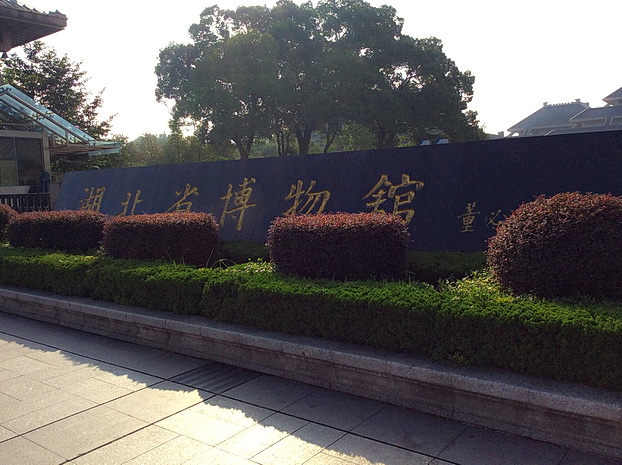
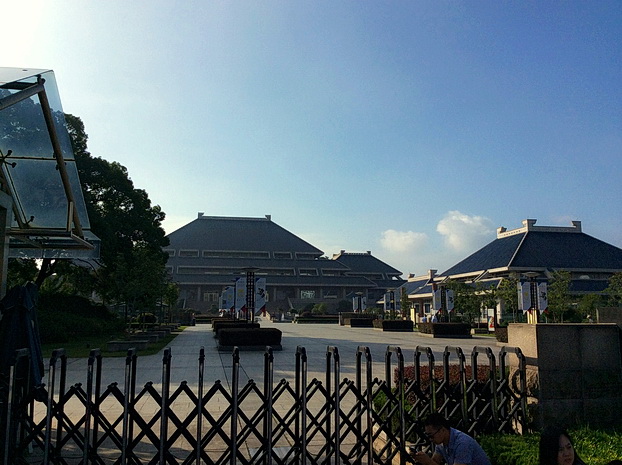
The Hubei Provincial Museum is one of the most renowned museums in China. It is located on Donghu Road, which runs alongside the beautiful Donghu Lake. This provincial-level museum showcases over 200,000 ancient artifacts. It’s said that to see every piece, one would need at least half a day to a full day (we only have half a day today, hoping we can see everything!). The Hubei Provincial Museum is open to tourists for free every day (except Mondays) from 9AM to 5AM (last admission at 4PM). Visitors have to queue and obtain their entry tickets at the museum’s front desk each day, and the number of visitors is limited to 2,000 per day. On weekends (Saturday and Sunday), it’s advisable to arrive in the morning to avoid long queues. Additionally, if anyone brings a large bag (such as a suitcase), the museum doesn’t allow it inside and provides free storage lockers near the ticket counter.
.
.
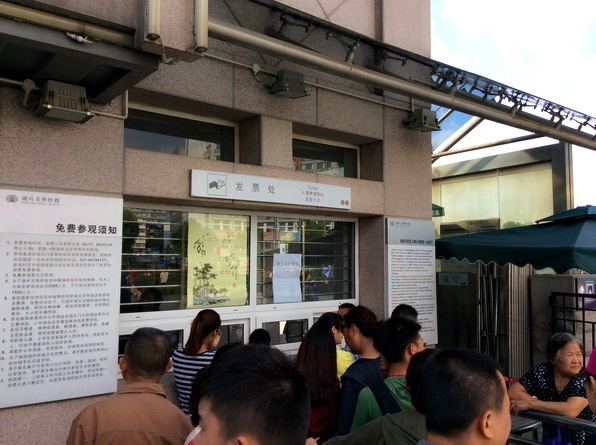
Queuing for the ticket in front of the musuem

.
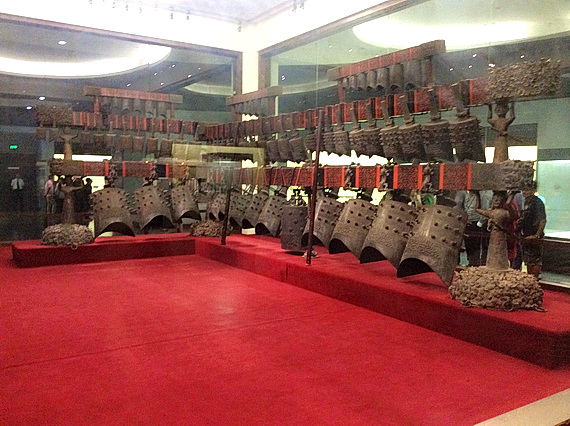
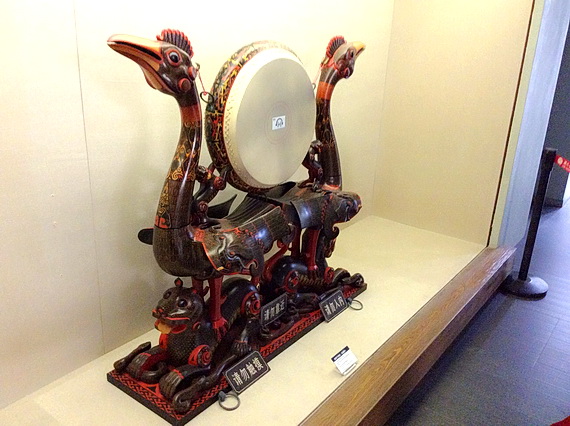
Once we entered the museum, we discovered that its exhibitions were divided into different rooms. Each room contained a collection of similar ancient artifacts grouped together. The most famous artifact in this Hubei Provincial Museum is a set of bronze bells, over 2,400 years old, excavated from the tomb of King Ching Ho-wa. When I saw these bells, it reminded me of “Liu Fu,” a legendary songwriter and musician who emerged during the Three Kingdoms period. Liu Fu was known for his exceptional skill in designing bell sets for high-profile performances during that era. However, Liu Fu met a tragic end while intoxicated. He was murdered by Cao Cao, a warlord, during a banquet while reciting poetry, as they were preparing for the final battle at the Red Cliff (where Cao Cao’s navy was defeated and forced to retreat). Cao Cao asked Liu Fu to critique his poetry, and initially, Liu Fu praised it without negative comment. But then Cao Cao insisted that Liu Fu should provide honest criticism, pointing out the flaws that still remained. In his intoxicated state, Cao Cao became furious and grabbed a spear, stabbing Liu Fu to death. Ultimately, when he sobered up, he deeply regretted being the one who killed the era’s poet, as no one else would be able to find such talent again.
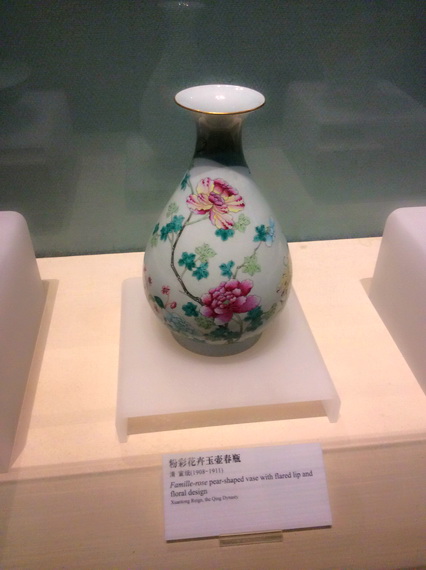
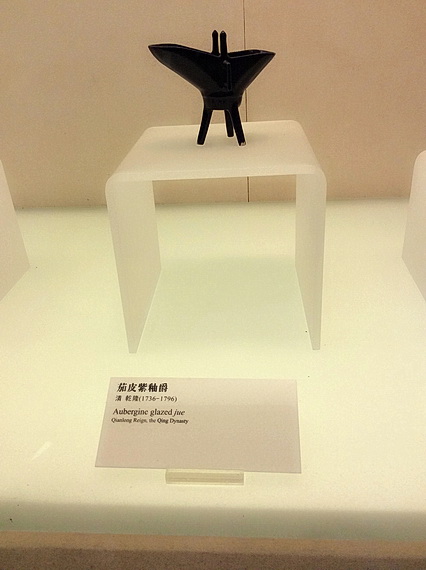
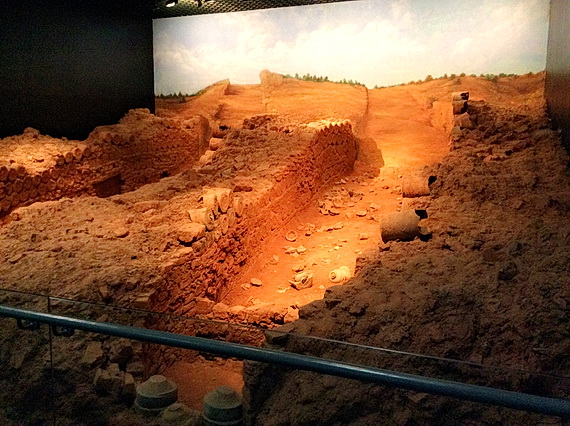
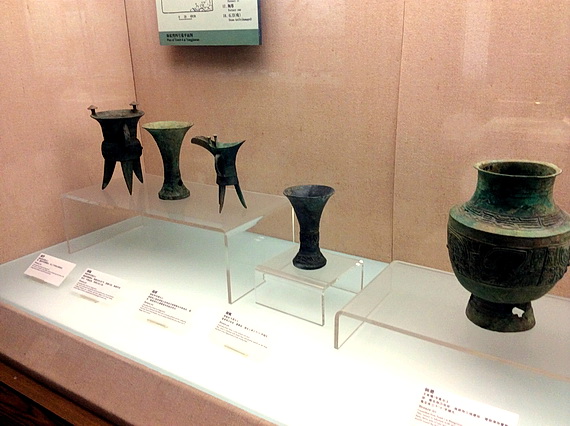
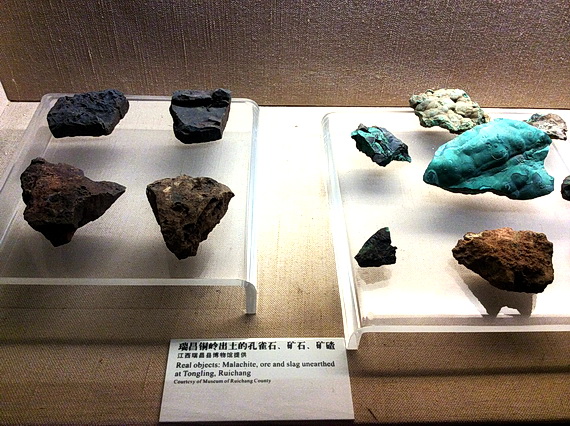
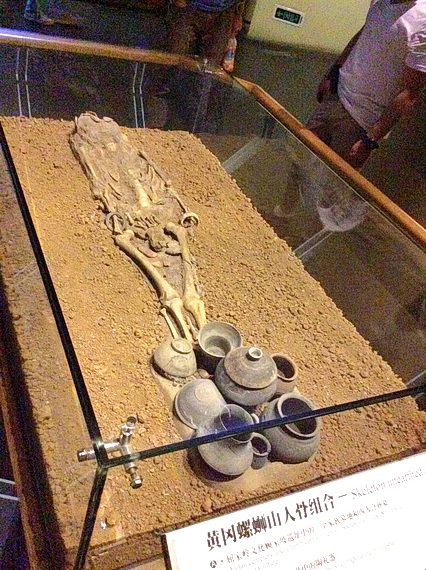
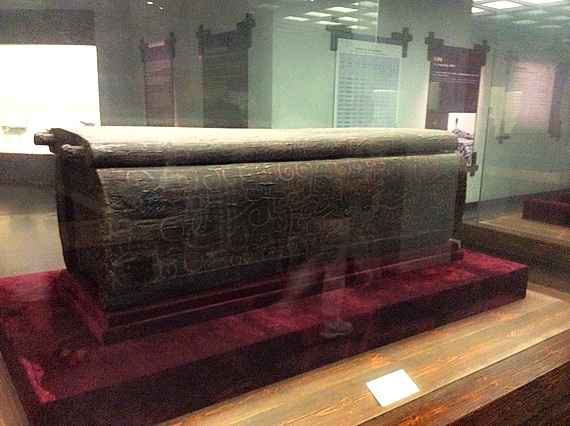
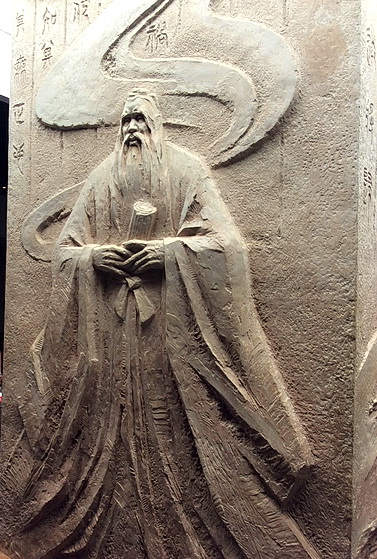
In addition to the set of bronze bells, the Hubei Provincial Museum also housed various other ancient artifacts collected from China, spanning from the era of the Hongshan culture, when Hongshan was a kingdom, to the revolutionary period of governance, such as the Jian Kai Chek era and the Mao Zedong era. The types of ancient artifacts ranged from clothing and household items used in the palace to a variety of weapons and utensils used by ancient Chinese people. There were also ancient coins and valuable gold and silver items. The museum even displayed skeletal remains and burial sites. During our visit, the museum was showcasing a temporary exhibition of Napoleon artifacts, which had been acquired from France for a limited period of time.

.

.
.
.
.

.

.

.

.
.
.
.

.

.

.

.

.

.

.

.
.
.
.
.
.
We spent almost the whole day at the museum, until around 2.30PM, because there was so much to see. Each piece was equally fascinating, and it truly allowed us to delve into the history of China from ancient times. However, the downside became apparent around noon when we started feeling hungry. I approached the information counter and asked if there were any food options nearby. Unfortunately, the staff couldn’t speak English, so my mother had to step in and help with the conversation. Finally, we were told that there was only one cafeteria in the vicinity. They provided directions, but when we arrived, it wasn’t as crowded as we had anticipated. There was only one restaurant selling boxed lunches. We were left with the choice of “to eat or not to eat.” In the end, we decided to eat because we were hungry and didn’t know where else to find food. The meal consisted of stir-fried chicken with eggplants, stir-fried cucumber, pickled vegetables, along with plain rice and a clear soup. The price wasn’t too expensive, around 10 CNY (1.50 USD). As for the taste, let’s just say it was suitable for health-conscious individuals, as it was light and consisted mainly of vegetables. It helped alleviate our hunger, but the real treat was the nearby coffee shop right next to the cafeteria. It allowed us to have something to cleanse our palates. The coffee tasted decent, although it was slightly more expensive, priced at 20-25 CNY per cup (3.00-3.75 USD).

.
Around two-thirty in the afternoon, we bid farewell to the museum and prepared to head to Wuhan Airport for our return journey to Bangkok. We walked out of the front of the museum to hail a taxi. This time, I wanted to showcase my taxi-hailing skills and asked my mother, “Mom… how do you say ‘Airport‘ in Chinese?” My mother promptly responded, “Jī-Cháng (机场).” When I spotted a taxi approaching, I confidently hailed it. Once it stopped, I opened the door and said, “Jī-Cháng.” The driver paused for a moment, a bit puzzled, but I considered it a successful attempt (Hahaha+ :-P ). During the ride to the airport, my mother conversed with the taxi driver following the customary etiquette, and once again, we encountered the same question from the driver, “Why don’t both of your sons speak Chinese?” I wondered if studying Chinese would be a bright idea since Chinese people still expected us to speak Chinese.
The taxi ride took about 40 minutes and brought us to Wuhan Airport. The fare was approximately 95 CNY (14 USD), which was cheaper compared to the deceitful ride we had on the way here. We arrived at the airport around 3PM, a couple of hours before the scheduled departure time. With plenty of time on our hands, we found that the international passenger terminal was small, and there weren’t many people around. We had to wait for the check-in counter to open separately since we arrived too early. While waiting, we conversed with my mother about how the trip had been, discussing the good and not-so-good aspects. Mostly, my mother didn’t criticize the places we visited, but she had more to say about the Chinese people. She jokingly told me that if I hadn’t accompanied her, I would probably have gotten lost because I couldn’t speak Chinese. Well, I had to admit that was true. :-P
When it was time, we went to check-in, drop off our baggages, and waited at the departure gate. Today, the flight departed on time, and we arrived in Bangkok around 8PM. Throughout the journey, seeing my mother sitting next to me on the plane, I felt genuinely happy. Being able to travel together, spending time with each other, was something we hadn’t had the opportunity to do for many years. Seeing my mother so happy, I felt a sense of joy knowing that I could bring her such happiness. If there’s another chance, I won’t miss the opportunity to travel with my parents and siblings again because it’s something we can share and bring each other happiness without even saying a word. Although this trip to China was short, just three days, I am confident that I will remember it for the rest of my life. I am certainly sure. :-)
:::::::::::::::::::::::::::::::::::::::::::
Written By : SHIPY SIWARIT TIASUWATTISETH
 Shipy-Ship