First of all, brace yourselves for this incredible trip I’m about to share. This journey involved a total of two companions, making us a trio. Now, these two individuals were no ordinary people; they were none other than my own mother and younger brother. However, this trip concluded with an unexpected twist, as we hastily planned to visit Wuhan and Jingzhou (Hubei). Initially, I had intended to take my mother to Hong Kong and Macau to avoid the hassle of visa arrangements. This was due to the fact that my mother resided in a different province, while I was working in Bangkok. Dealing with visa procedures was quite a challenging task, to say the least. However, after I came back to consider about the trip and saw that my mom was really wanted to visit China at once in her life. it was because her ancestors were born and migrated from China and she would like to see her mother-country.
Finally, I decided to take her to China and my younger brother also would like to join the trip. Next, as China is the big country and has plenty of choice to visit with various culture, it made me hesitate to select. Anyhow, as we had only 3 days 2 nights for this trip, we had selected Wuhan as it is not too far (only 3 hours flight) and it has interesting place related to The Romance of The Three Kingdoms, one of my favorite literature.
After that, we spent time about 2 weeks to arrange the document and applied the VISA for all of us. Then, we had purchased Air tickets and booked the hotel. We were ready to fly only 10 days before traveling time. It was amazing and efficiency arrangement though. ✈️
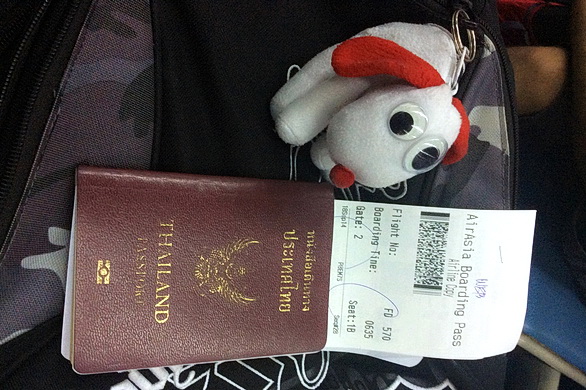
On the day of our journey, we left home around 4.30AM to ensure we reached Don Mueang Airport by around 5AM since we had booked a morning flight at 7.15 AM. As expected, the line for the China-bound flights was quite long, despite it being a regular Thursday. Luckily, we had already completed the internet check-in, so we only needed to drop off our bags at the Baggage Drop counter, which had a much shorter queue. After that, we went through security and immigration procedures as required. We arrived at the gate around 6.30AM, a good 45 minutes before departure. Just sitting and waiting at the gate felt like we had already arrived in China, given that over 90% of the people around us were Chinese. It wasn’t hard to imagine how lively and animated their conversations would be. Consider it a warm-up before visiting their homeland. :-)
.

.
From Bangkok to Wuhan, the flight took approximately three and a half hours, plus China’s time being one hour ahead of us, so we arrived there around 11.30AM local time. Fortunately, Wuhan Airport had a small Terminal for International flights, while the Domestic Hall used a larger Terminal. This meant that the Immigration line was not long, and there weren’t many people around (probably because there were more passengers on domestic flights, hence the use of the larger Terminal for domestic travel). We didn’t spend much time there and quickly made our way outside to find a taxi into the city (the airport was about 30 kilometers away from the city center). Prior to our arrival, we had learned that there were metered taxis available at the airport for city transfers, but strangely enough, we couldn’t find any when we walked out. All we found were taxis offering fixed fares, which were all priced at 200 CNY or around 30 USD which was quite expensive at 1,000 baht for a mere 30-kilometer distance. But we had no choice as we couldn’t find a metered taxi, and the rain seemed imminent We had booked a hotel at Dorset Hotel, Jianghan Street.
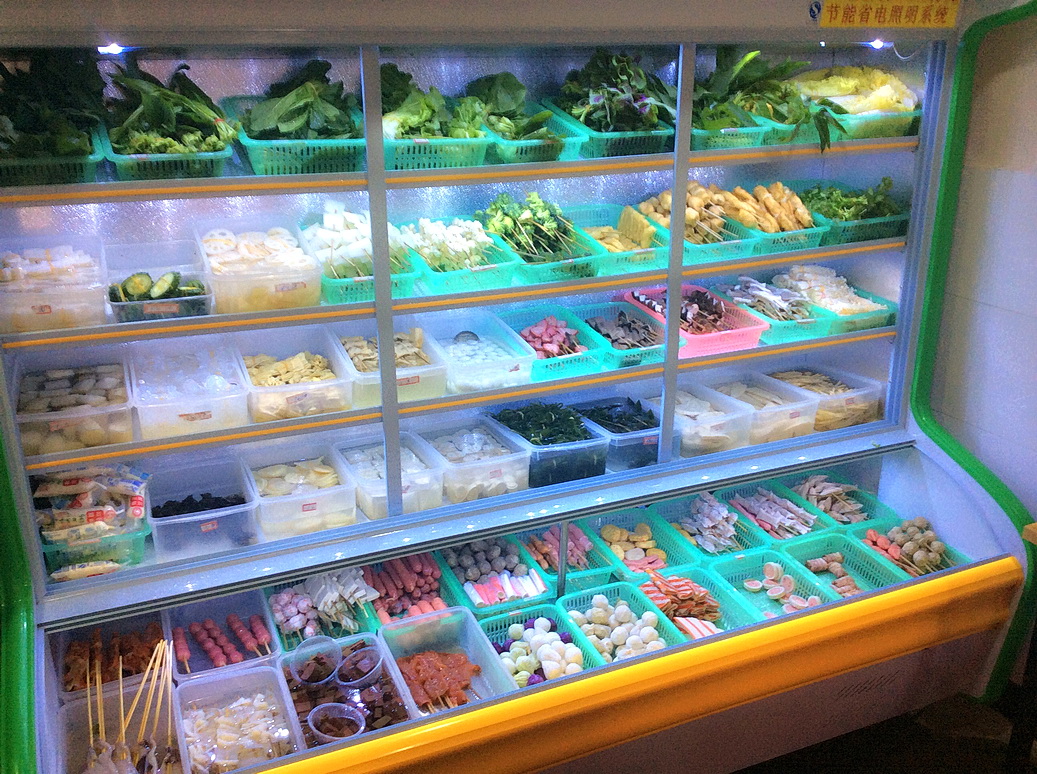
We spent about half an hour on the taxi before reaching the hotel, right around 1PM. We checked in, dropped off our bags, freshened up with a quick face wash, and then set out to explore in the afternoon, following the plan we had laid out on the map. The weather that day was pleasantly cool, around 18-22 degrees Celsius, but there was a constant drizzle of rain. We left the hotel around 1.15PM, aiming to find something to eat near Jianghan Street, which was a bustling pedestrian street in the heart of Wuhan. Along the way, we stumbled upon a noodle shop that seemed safe to try (in China, it’s generally safest to eat hot, freshly prepared dishes). This particular shop had a unique self-service concept for their noodles. It had a display cabinet with fresh ingredients, such as various types of meatballs, squid, and shrimp, while the vegetables were neatly arranged in small bundles or chopped into small pieces. We could choose whichever ingredients we liked, picking as many or as few as we desired. The price depended on the type of ingredient chosen. Once we made our selections, we then chose the type of noodles we wanted, ranging from rice noodles, wheat noodle, ramen and rice vermicelli. The staff would then cook the noodles and serve them in bowls for us to enjoy right there in the shop. I selected around 3-4 ingredients and opted for white noodles, which cost an average of 8-10 CNY per bowl (2 USD). It was an authentic, customizable Chinese dining experience that satisfied both my taste buds and curiosity.

.
.

.

.
After satisfying our appetites, we hailed a taxi to our first destination, Guiyuan Temple, immediately. Throughout this trip, we primarily relied on taxis to get around the city since my mother had difficulty walking long distances. It was inevitable that my mother who is only Chinese speaking person among us would be the one communicating with the taxi drivers, which made me realize just how challenging it was to navigate China without being able to speak Chinese. So I was solely responsible for paying the fare. :-)
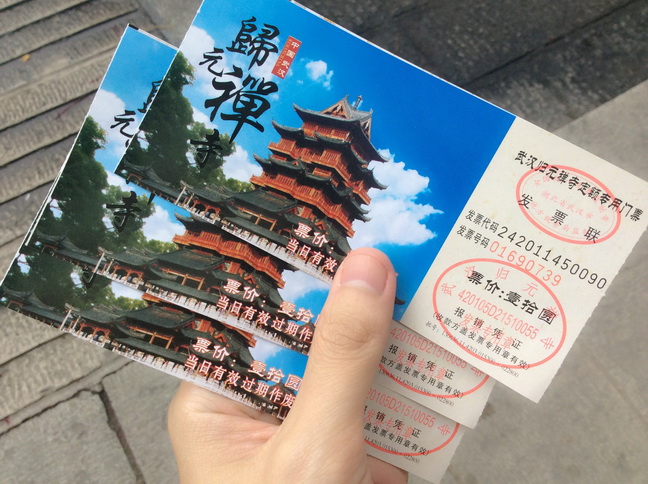
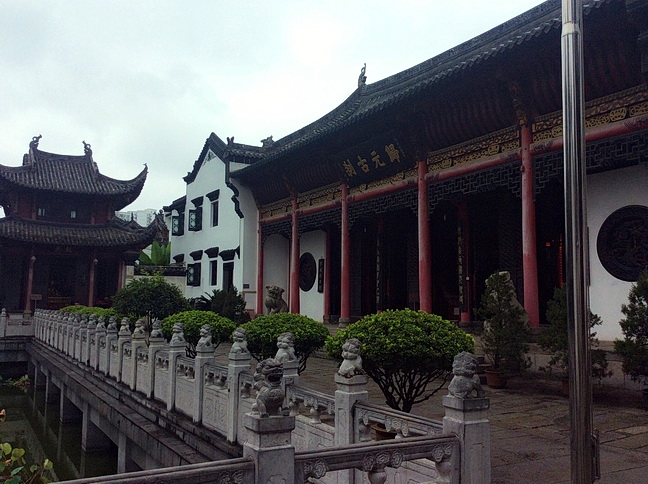
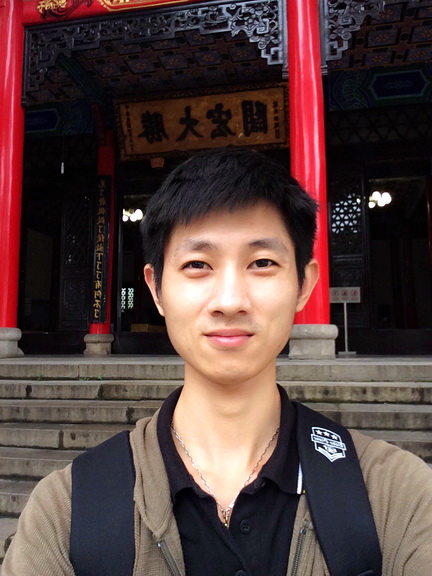
The taxi ride took no more than 20 minutes, and we arrived at Guiyuan Temple. Along the way, my mother engaged in a conversation with the taxi driver, and I hoped that they weren’t gossiping about me. Meanwhile, my younger sibling sat capturing photos continuously throughout the journey. As for me, I tried to entertain myself with my phone, browsing Facebook or chatting on LINE to alleviate boredom. Unfortunately, China had blocked access to these platforms, including Google (I hadn’t activated roaming for this trip, so I couldn’t use them). Thus, I had to sit and listen to my mother’s conversation with the taxi driver, completely oblivious to what they were discussing. When we reached Guiyuan Temple, we hadn’t even had a chance to enter when someone approached us, seemingly sensing that we were tourists. They insisted we purchase tickets immediately. The ticket price was 10 CNY per person, or roughly 1.80 USD.
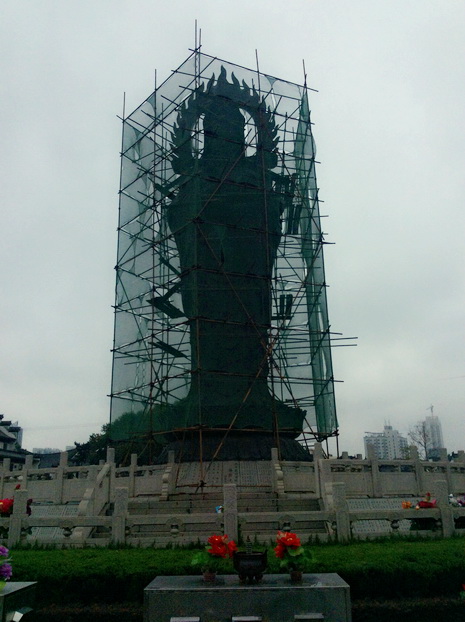
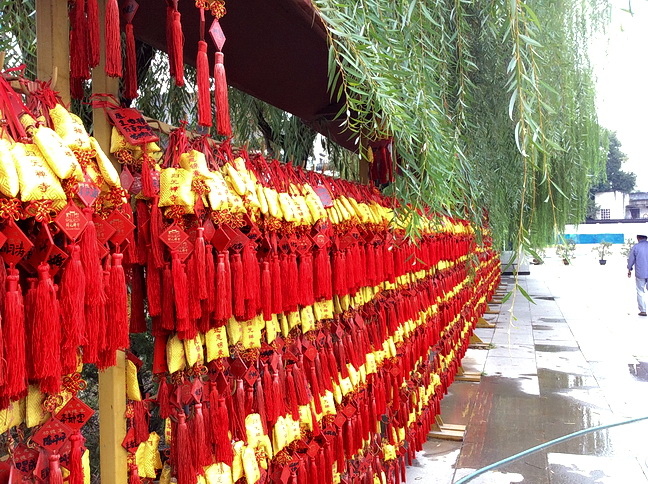
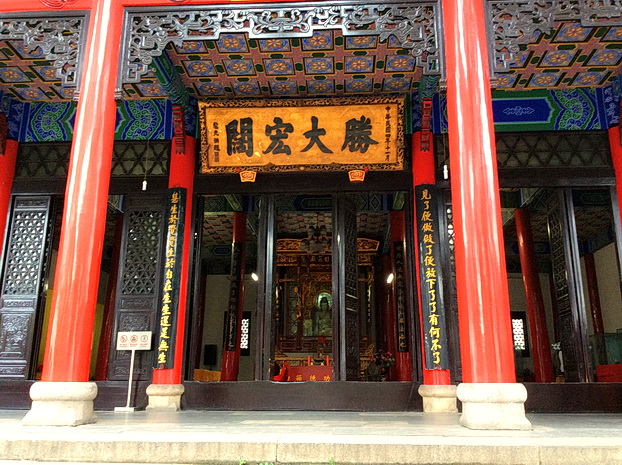
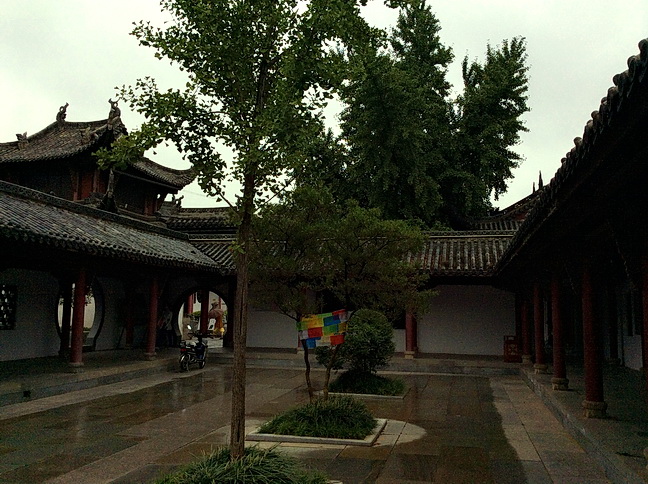
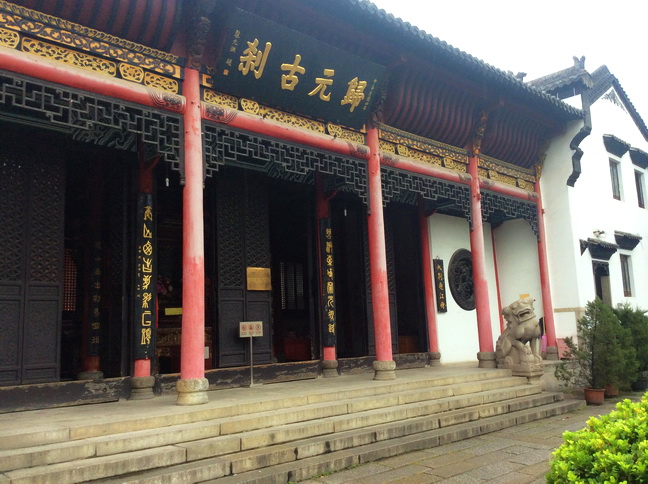
Guiyuan Temple, approximately 300 years old, was one of the four ancient temples in Wuhan. Legend has it that in the past, there were numerous casualties and deaths during a war that occurred in the vicinity of Guiyuan Temple. The area where the temple now stands used to be a battlefield. The temple’s abbot, known as Phikwang, happened to pass through this site and witnessed the large number of deceased individuals. To honor them, he conducted rituals. The ruler of that time, who had lost a finger in the war, saw Phikwang performing these rituals and believed that the abbot possessed magical powers. Consequently, the ruler asked Phikwang to help restore his missing finger. Once successful, as a token of gratitude, the ruler commissioned the construction of Guiyuan Temple. The highlight of Guiyuan Temple was the grand statue of Goddess Guanyin, which unfortunately, during our visit, was undergoing renovations. Additionally, the temple featured 500 golden altars, each with its unique design. However, inside Guiyuan Temple, no worshipers were allowed to place offerings or burn incense. Only the area in front of the temple’s entrance permitted the placement of sacred objects with incense.
.
.
.
.
.

.
.
.

.

.
.

.
We spent about an hour and some minutes at Guiyuan Temple. Around three in the afternoon, we decided to change our location. The second destination on our itinerary was the Yellow Crane Tower. We took a taxi from the front of Guiyuan Temple, and it took us approximately 45 minutes to cross the Yangtze River and arrive at the Yellow Crane Tower.
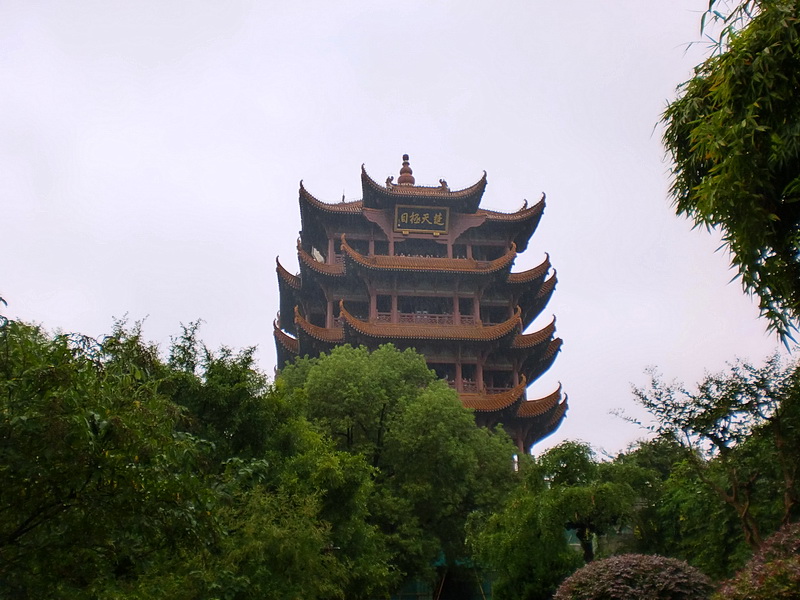
The Yellow Crane Tower was constructed in the year of 223 during the Three Kingdoms period and originally stood on the banks of the Changjiang River. When Sun Quan, the ruler of the Wu Kingdom, captured the city of Jingzhou, he ordered the construction of the tower as an observation post to defend against attacks from the Shu Kingdom. The Yellow Crane Tower was located in the western part of the city of Wuhan (not its current location). It was built with bricks and wooden structures imitating the original design, comprising a five-story tower that was 51 meters high with additional mezzanine floors, totaling ten levels. It has been a symbol of Wuhan throughout history and has undergone numerous renovations and repairs due to its gradual deterioration. It has been rebuilt four times, and the current tower is a new structure resembling the original one. It is one of the three famous towers in China and serves as a venue for displaying Chinese calligraphy and paintings. It also offers a panoramic view of the Yangtze River. In 1957, a new bridge was constructed across the Yangtze River, away from the original location of the Yellow Crane Tower. Therefore, in 1984, as part of the centennial celebration since the tower’s destruction during the uprising of the Warlord Era, the new Chinese government of Wuhan embarked on a project to rebuild the Yellow Crane Tower on its current location atop Sheshan Mountain.
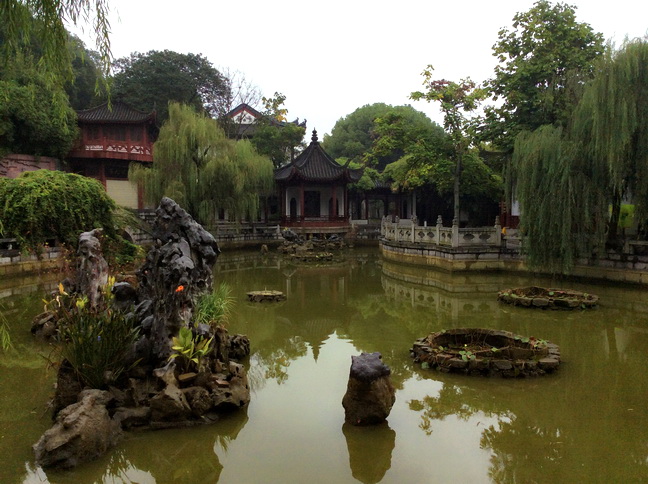
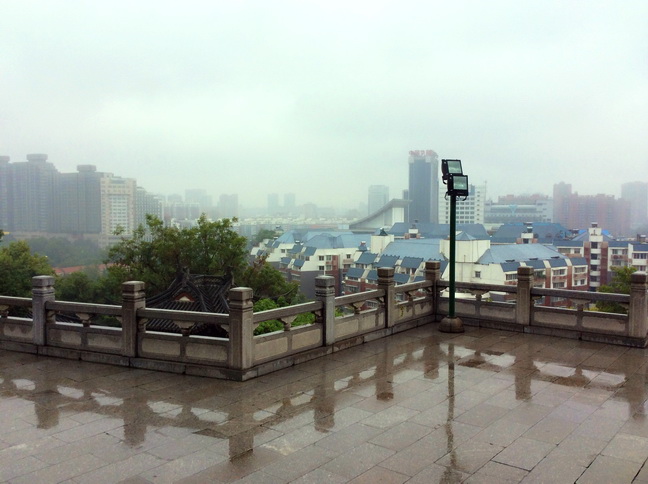
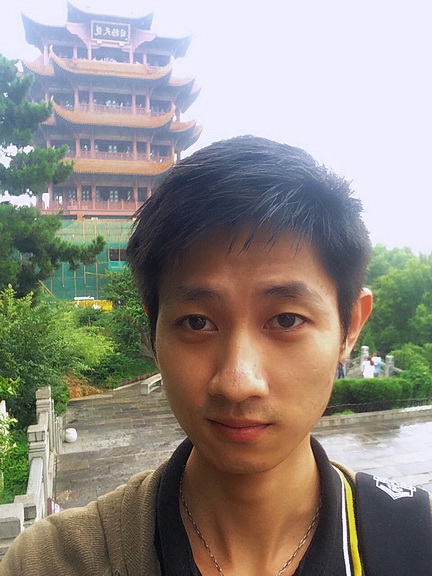
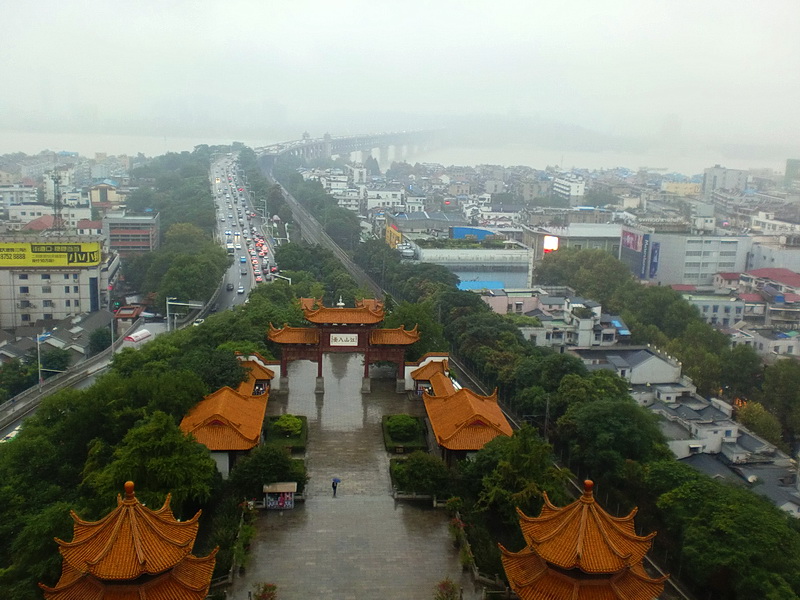
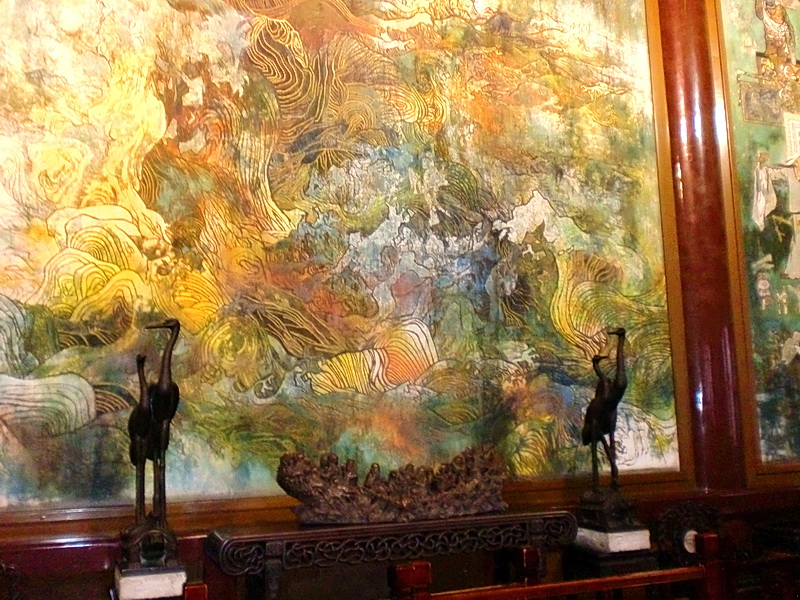
When we arrived at the Yellow Crane Tower, it was almost 4PM, which meant we had about two hours to explore here. We immediately went to buy tickets, which cost 80 CNY each (approximately 12 USD). While purchasing the tickets, my mom struck up a conversation with the ticket seller. She told me that the seller asked if we could handle going up because the stairs were very high, and her legs might not be in the best condition. At first, I thought it wouldn’t be too high and we had already come this far, so we could manage. I bought the tickets for my mom without hesitation. However, as soon as we started walking in, my mom saw the stairs and said, “You two go up together. I’ll wait down here in the garden. I don’t want to risk climbing up.” It had just stopped raining, and the floor was quite slippery. She didn’t want to take the risk, so she decided to stay below and admire the beauty of the ancient garden and the pond. As for my younger sibling, he disappeared as soon as my mom started talking, and the photographer entered the gate with the camera strapped around their neck. After that, I walked inside to admire the beauty of the Yellow Crane Tower, starting from the surrounding area and gradually exploring each floor. Finally, I reached the top floor, where I could enjoy the breathtaking views of the Yangtze River and the city of Wuhan. Combined with the atmosphere after the rain, it appeared as if the city was enveloped in a mist, enhancing its beauty even more.

.

.
.
.
.
.

.
.

.
.
.

.
We stayed at the Yellow Crane Tower until it was almost closing time at six o’clock in the evening. At that moment, it started raining again, so we decided to leave. We stood by, waiting to hail a taxi near the entrance of the Yellow Crane Tower to return to our hotel. After about 15 minutes of waiting with no vacant taxis in sight, we made the decision to take a shortcut through the public park to the area with traditional houses and shops. It took us over half an hour to finally find an available taxi that agreed to take us. However, during that half-hour, we endured heavy rain (continuous without any signs of stopping) and chilly weather (around 18-20 degrees Celsius). It never occurred to us that finding a taxi in China during the rain was no different from back home. We spent nearly an hour in the taxi before reaching our hotel because the traffic during the rain was horrendous. However, on the way back, the taxi passed through the tunnel that pierced through the Yangtze River, which was several kilometers long. It was another fascinating aspect of China. If China decides to do something, it becomes grand and amazing (I knew it was a tunnel because the taxi driver told my mom, and my mom translated it to me again). Today, we took three taxis. All three drivers asked my mom the same question, wondering why her children couldn’t speak Chinese. Even I didn’t know how to answer (probably because we have Chinese-ethnic but didn’t speak Chinese, which seemed strange to them).
We arrived at the hotel around midnight and looked for something to eat near the hotel (on Jianghan Street). Today, the street wasn’t crowded because of the rain, and there were fewer vendors. We hoped that if it didn’t rain tomorrow, we would have a chance to experience the bustling Chinese pedestrian street. When we returned to the hotel, all three of us immediately took a shower. Today, my mom looked very tired as she woke up early, had a three and a half-hour flight, and spent the whole day walking. However, it seemed like she was happy to go out and travel, to see and experience new things, and to show her child that learning Chinese is beneficial (Why didn’t you learn it?). And today is another day where I feel proud that I can bring my mom to the place she wanted to visit, even though there were initially some challenges that seemed difficult. But if you really want to do something, you can do it. Today is another day where I can sleep and dream well. 👍
::::::::::::::::::::::::::::::::::::::::::::
Written By : SHIPY SIWARIT TIASUWATTISETH
 Shipy-Ship