After a satisfying sleep on the Russian sleeper train for approximately 8 hours, I arrived at Moskovsky Railway Station (Московский) in the city of Saint Petersburg, also known as “The Queen of Europe.” It was around six in the morning when I stepped off the train.
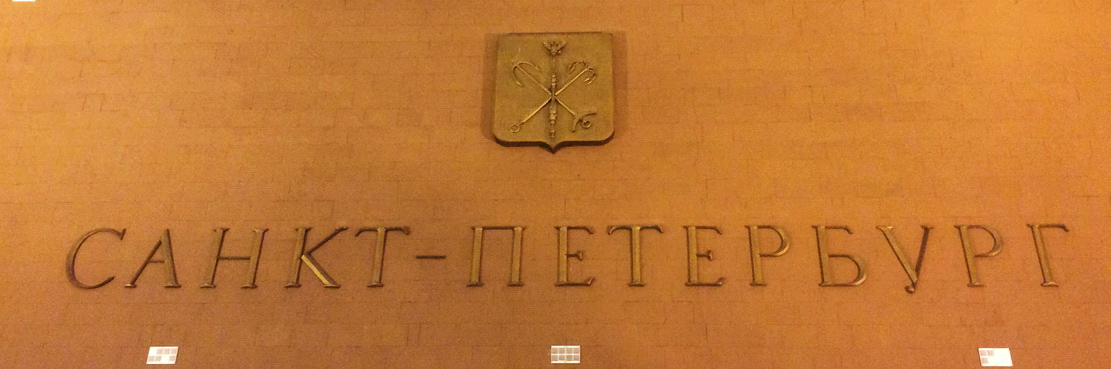
Welcome to Moskovsky Station (Московский) – St.Petersburg
.
The sky was still dark due to the winter season, and the sun was about to rise, peaking just before 9AM. Once I reached Saint Petersburg, I freshened up in the restroom to wash my face. The first thing I noticed upon arriving in the city was that it was colder than Moscow, although there was no snow. This might be due to its coastal location near the Gulf of Finland, which prevented snowfall. The air was freezing, to the point where I couldn’t remove my gloves for more than two minutes while outside. After washing up and having breakfast at the station, around 7AM, I walked to Superhostel 14 Pushkinskaya, which I had booked in advance. It was located approximately 400 meters from the railway station, so it was within walking distance. I dropped off my luggage at the hostel, allowing me to continue exploring the city. I planned to check-in later in the evening. As I entered the hostel, I pressed the doorbell for reception to close the door (they had a remote control system, so the receptionist didn’t have to come down to open the door, just press the door open button on their desk, quite modern). Inside, I encountered a receptionist who couldn’t speak English, but they relied on Google Translate on their computer to communicate. They typed in Russian and showed me the English translation. The gist of the message was that I could leave my luggage but couldn’t check-in before 2PM. It wasn’t a problem for me as long as I could leave my bags. I would come back in the evening for check-in, and I didn’t forget to ask the receptionist to do the Visa Registration, just like in Moscow. They kindly informed me that they could do it for free but it would take two days. That was fine with me since I was staying here for three days anyway, so I had plenty of time.
After finishing with my luggage deposit at the hotel, I checked the time, and it was around 8AM. I didn’t want to waste any time, so I immediately headed out to continue my sightseeing. I walked towards the metro station, which was located next to Moskovsky Railway Station. Following my usual strategy, I decided to buy a multi-trip metro ticket to save money. I approached the counter and politely asked in English, “May I buy a 20-trip ticket, please?” The lady at the counter responded in the local language, assuming that she didn’t understand. So, I resorted to Plan-B. I typed the message into Google Translate and showed her the Russian translation. She responded again in a lengthy Russian explanation, seemingly displeased. At that moment, I decided, “Well… I guess I don’t need it then.” I walked away from the counter and noticed an automated ticket vending machine nearby. I approached it, thinking, “Oh… this might be a miracle for today.” To my delight, the ticket vending machine had an English menu. I kept pressing the options and discovered that I had to pay for an empty card first, which cost 55 rubles (approximately 1 USD). The card itself didn’t have any trips loaded. Once I had the card, I placed it on the card reader of the vending machine to load the trips. I chose to load 10 trips, which cost 290 rubles (5.50 USD), averaging 0.55 USD per trip. It was much cheaper than buying individual tickets, which cost 50 rubles (about 1 USD) per trip. From now on, I didn’t have to bother the lady at the counter anymore. :-P

Automatic Ticket Vending Machine in St.Petersburb Metro Station
.

Sample of Metro Ticket in St.Petersburg
.
Once I had my metro ticket, I proceeded with my mission to reach my first destination of the day, the Peterhof Palace, also known as the Summer Palace (although I was visiting during winter ;-) ). To get to Peterhof, I had to take two modes of transportation: the metro and a minibus. I started by boarding the metro at Ploshchad Vosstaniya Station, which was adjacent to Moskovsky Railway Station. I took the metro for seven stations until I reached Avtovo Station on Line 1 (Red Line). After exiting Avtovo Station, I crossed the road by passing through an underpass to reach the row of white minibusses parked there. Most of these minibusses passed by Peterhof Palace. However, the signs on the minibusses were in Russian. So, I employed a basic technique of directly asking the driver, “Peterhof?” If they nodded, it meant I was on the right track and could begin my business. The minibus fare was around 65 rubles (approximately 1.25 USD), which I paid directly to the driver when I disembarked. The distance from the minibus stop to Peterhof Palace was approximately 22 kilometers, and it took about 30 minutes. The Russian minibusses would be stopped at designated signs, and passengers had to inform the driver in advance. It was like saying, “Please stop at the next sign.” During the journey, I kept my Google Maps open to ensure I didn’t miss my stop. However, for those who prefer my technique, if you have been traveling for about 25 minutes, keep an eye on the left side. If you see a large Orthodox church on the left, it means you’re close to Peterhof. Then, prepare yourself to get off at the door and point to the driver to indicate that you want to disembark at that sign. But don’t forget to pay the fare before getting off :-)
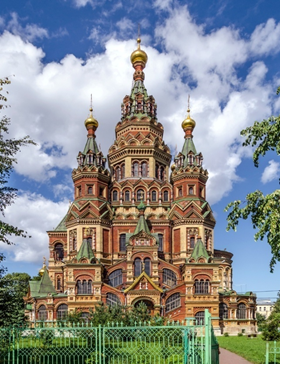
The Orthodox church – The observation sign before reaching Peterhof
https://en.wikipedia.org/wiki/The_Cathedral_of_Peter_and_Paul
.
After getting off the minibus, I continued walking for about 300 meters until I reached Peterhof Palace, situated on the right-hand side. Moreover, the weather was quite chilly at that time. It felt even colder outside the city compared to within the city. By that point, it was already past 9AM, but I wasn’t afraid. Beautiful and stunning sights were waiting for me right ahead.
The Peterhof Palace is another global heritage site declared by UNESCO. It was commissioned by Tsar Peter the Great in 1705 to proclaim the grandeur of the Russian Empire and to surpass the beauty of the Versailles Palace in France. Skilled craftsmen and architects, more than ten individuals, were appointed to design and construct this magnificent palace, which took ten years to complete. Tsar Peter the Great utilized the palace as his hunting lodge during the summer, hence the name “Summer Palace.” The complex consists of three main parts: the Upper Garden, connected to the main entrance; the Grand Palace; and the Lower Garden, featuring fountains and gilded sculptures, with canals leading to the Gulf of Finland. Moreover, on the left wing of this palace, it holds historical significance as the residence of King Rama V, who visited Russia in 1897. Currently, the palace is open as a museum, showcasing historical artifacts that highlight the exquisite beauty and architectural marvel of the past.
Peterhof Palace is open for visitors every day from 9AM to 7PM (until 10PM on Saturdays). The admission fee to the museum is 550 rubles per person (approximately 10 USD).
Once I entered the area within the walls of Peterhof Palace, it was still considered morning. The upper garden, which was adjacent to the entrance gate, was almost empty, perhaps because it was already winter and the fallen leaves covered the ground, discouraging people from taking photos in the upper garden. However, I found the leafless upper garden strangely captivating and decided to capture a few small photos of it. The upper garden was adorned with various ornamental plants, with the grand palace serving as a beautiful backdrop. But I knew the real highlight of Peterhof Palace was the lower garden and the interior of the palace itself. After spending a short time capturing images in the upper garden, I strolled towards the lower garden. Visiting Peterhof Palace between March and October, around 11AM, was a golden opportunity because it was the time when the fountains in the lower garden came to life, accompanied by music. It felt as if you are stepping into a mythical land. However, even if you didn’t visit during that specific time, it wouldn’t be considered a major loss. Winter at Peterhof Palace was equally stunning. The snow-covered grounds blended with the golden sculptures, creating a romantic atmosphere reminiscent of a mythical land. Moreover, the lower garden was situated next to the sea, leading to the Gulf of Finland. The view of the sea, with the majestic Peterhof Palace as a backdrop, was simply breathtaking. I couldn’t help but feel grateful that I didn’t have to fly over waters and seas or endure long train and bus rides to reach this place. It was truly a sight to behold, and it rejuvenated me in ways words can’t describe.
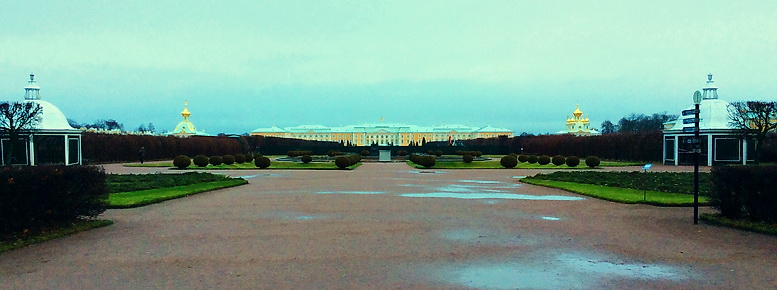
The front view of Peterhof Palace fron the upper garden
.

.

.
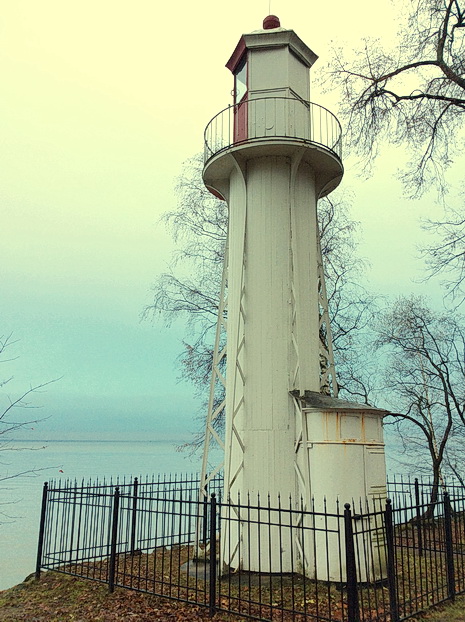
The lighthouse at lower garden, next to the sea
.

.
After immersing myself in the atmosphere of both the upper and lower gardens, it was around 11AM when I decided to explore the interior ambiance, artwork, and architecture within Peterhof Palace. Tickets for entry could be purchased at the entrance, and personal belongings or bags could be deposited at the lockers, where attentive staff members took care of them. However, photography was strictly prohibited inside the palace, so I had to leave my camera and even my tablet in the locker. Although mobile phones were allowed inside, I discreetly took some photos, but I made sure to respect the rules and regulations of the venue. It was a bit disappointing that I couldn’t capture and share the beauty I witnessed, but nonetheless, I highly recommend experiencing it firsthand. No photograph can truly convey the emotions felt when being there in person.
Inside the palace, I encountered exquisite architectural designs and luxurious furnishings on display. The intricate details and golden accents showcased the opulence, complemented by the presence of pearls, jewelry, and stunning paintings. Each item showcased the grandeur of Russia, surpassing what I had previously heard or read on the internet. It was a truly magnificent experience to witness firsthand.
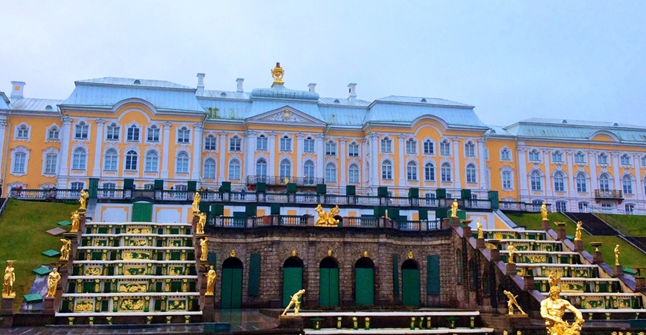
The peterhof palace view from the lower garden
.

.
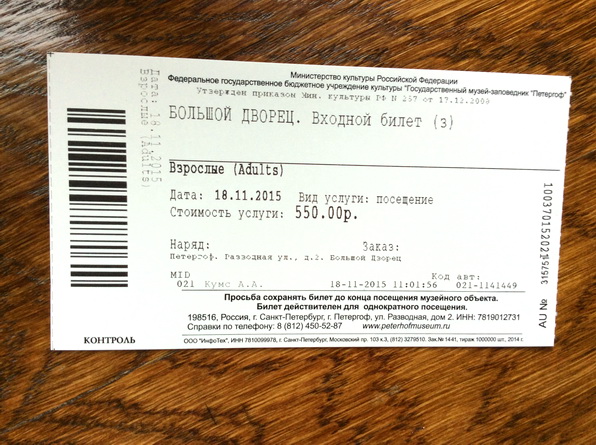
Admission ticket to Peterhof palace
.
I spent nearly 3 hours exploring Peterhof Palace until I forgot about hunger (again). Considering the expensive admission fee, I wanted to make the most of my visit and ensure it was worth it (I had to make it worthwhile, after all :-P ). And it truly was. The art, furnishings, and interior architecture within the palace were so beautiful that I felt the experience was well worth the grand staircase journey I had taken to get here. It made me proud that I had made it. However, as soon as I stepped out of the palace, hunger paid an immediate visit. Unfortunately, there wasn’t much to eat in that area, so I had to head back into the city. Luckily, I had packed a few snacks in my bag, so I grabbed them to tame my growling stomach. Survival mode activated.
Around 2 o’clock in the afternoon, I bid farewell to Peterhof Palace to continue my itinerary for the day. My next destination was the majestic Kazan Cathedral located in the heart of Saint Petersburg. To reach the Kazan Cathedral from Peterhof, I took a bus back to the metro station. I walked out of Peterhof and waited for the bus at the bus stop on the opposite side of where I had disembarked. When I saw the bus approaching, I raised my hand and asked simply, “Metro?” If the driver nodded, I knew it was the right bus (most buses went to the Avtovo metro station). It took about 30 minutes to reach the metro station, and I paid the fare of 65 rubles (approximately 1.25 USD) just like on the way there. Once I arrived at the metro station, getting to the Kazan Cathedral was no longer a difficult task. I took the metro for another 4 stations to Tekhnologichesky Institut (Технологический институт) to switch to Line 2 (blue line). Then, I took the metro for another 2 stations to Nevsky Prospekt (Невский проспект) station. From there, I exited the station on the canal side, and the magnificent Kazan Cathedral stood proudly right in front of me.
The Kazan Cathedral is an Orthodox church located on Nevsky Prospekt, the central street of Saint Petersburg. Originally, it was just a small church built in 1708 by Tsar Peter the Great. Later, during the reign of Tsar Paul I, the cathedral underwent a major reconstruction in 1799. The Tsar was greatly influenced by his visit to Italy and was fascinated by the Roman architecture. He commissioned the cathedral to be expanded and redesigned in the Roman style. The construction took a total of 11 years, and it was a collaborative effort of three architects: Charles Cameron, Thomas de Thomon, and Pietro Gonzago. The project was finally completed in 1811. Inside the cathedral, there was the revered icon of Our Lady of Kazan, a cherished symbol for the people of the city. Additionally, the interior was adorned with magnificent paintings and sculptures. The Kazan Cathedral was open to tourists and worshippers every day, from 8.30AM to 8PM, free of charge.
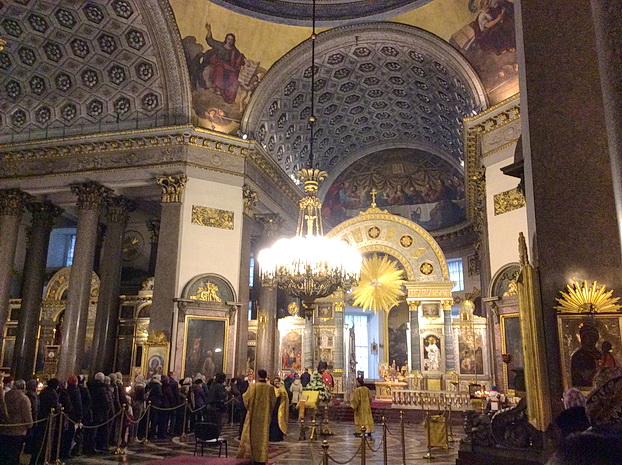
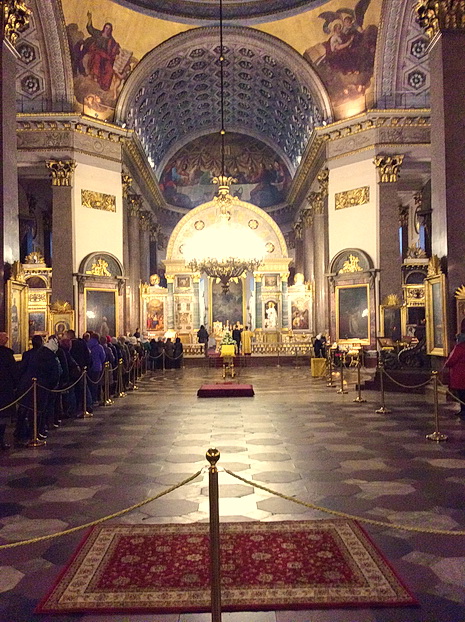
Inside the Kazan Cathedral on the day I visited, there seemed to be a Christian Orthodox religious ceremony taking place. I noticed people standing in line, holding candles, and respectfully approaching religious symbols. It was a truly fascinating sight for someone like me, who follows the Buddhist faith, and not something easily found in Thailand. The atmosphere inside the cathedral was filled with the devout energy of the Russian Christian community. The interior paintings and architecture were exquisite, depicting the stories of the religious order with great craftsmanship. It was a sight that didn’t leave me tired after the journey to Saint Petersburg.
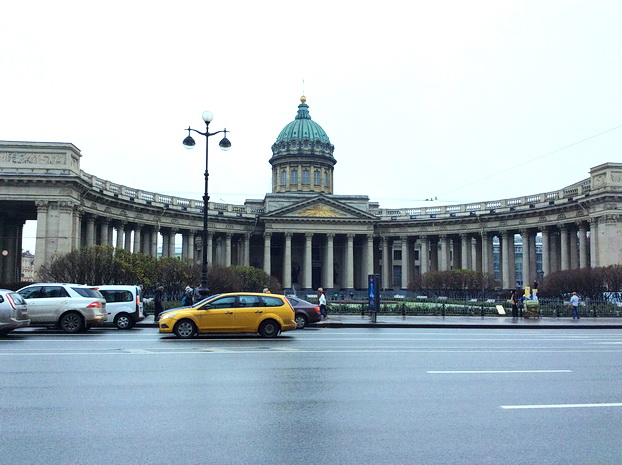
The Kazan Cathedral
.
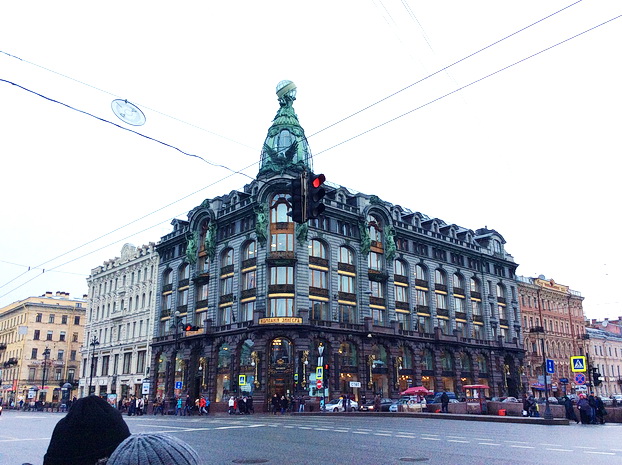
The city corner, opposite to Kazan Cathedral
.

.
.
.
Inside the Kazan Cathedral, it wasn’t particularly spacious. I spent about an hour here, and I have to say, I hadn’t eaten anything and was completely engrossed in exploring that I forgot about it. I played around and distracted myself until I was no longer hungry (Well, how about that?). Eventually, it was time for dinner, so I gathered myself and found a place to eat. It was around 4PM, and the sun hadn’t set yet. I decided to walk across the bridge to visit the Church of the Savior on Spilled Blood, which could be seen from the Kazan Cathedral (if you looked back from the cathedral, the Church of the Savior on Spilled Blood would be right behind you). As I walked out from the front of the cathedral and looked along the canal, I spotted the church directly ahead, about 500 meters away. I could simply walk along the canal to reach it. The view of this canal, flowing through the heart of the city, resembled the canals of Venice in Italy, earning Saint Petersburg the nickname “Venice of Russia.“
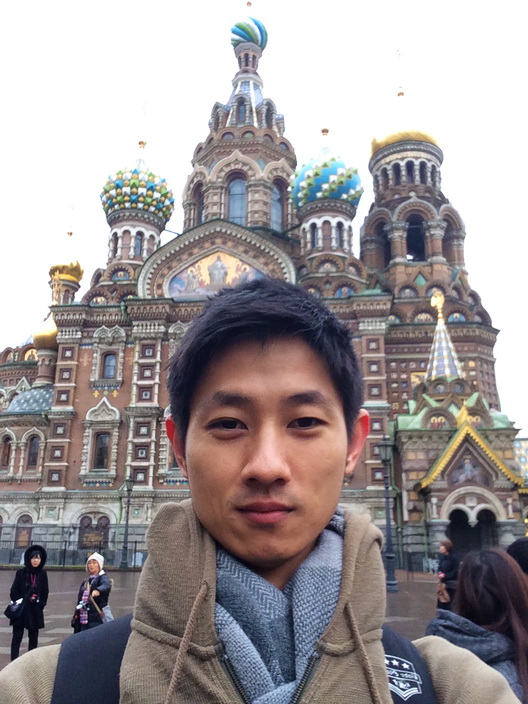
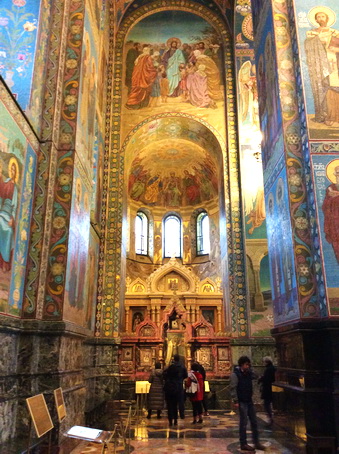
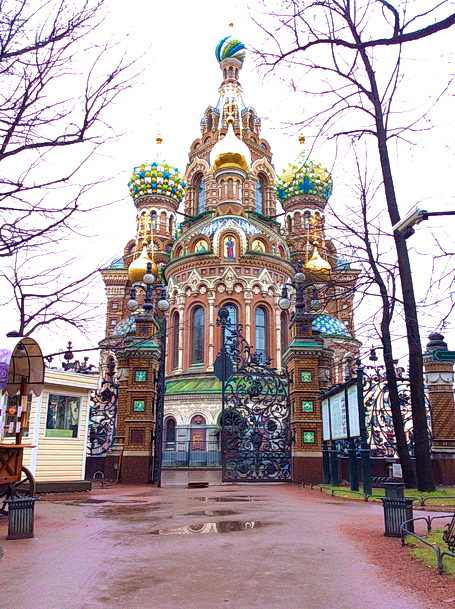
The Church of the Savior on Spilled Blood was built by Emperor Alexander III in 1883 as a memorial to his father, Emperor Alexander II, who was assassinated. The assassination led to unrest and dissatisfaction among the Russian people due to the changes in governance aimed at granting freedom. The exact location where the emperor was assassinated became the site for the construction of this church. It took 20 years to complete the church, with meticulous attention to detail and significant features, such as the 81-meter-high dome symbolizing Emperor Alexander II. The church was designed by Russian architects in the Baroque style and adorned with intricate mosaics, gems, and stunning murals that rival the beauty of the Basilica of Saint Basil in Moscow. The Church of the Savior on Spilled Blood is a must-visit landmark in Saint Petersburg, as it captures the essence of the city. Missing out on this site is like visiting Saint Petersburg in vain.
The Church of the Savior on Spilled Blood is open for tourists to visit every day from 10.30AM to 6.00PM (except Wednesdays). The admission fee is 250 rubles per person (approximately 5 USD).
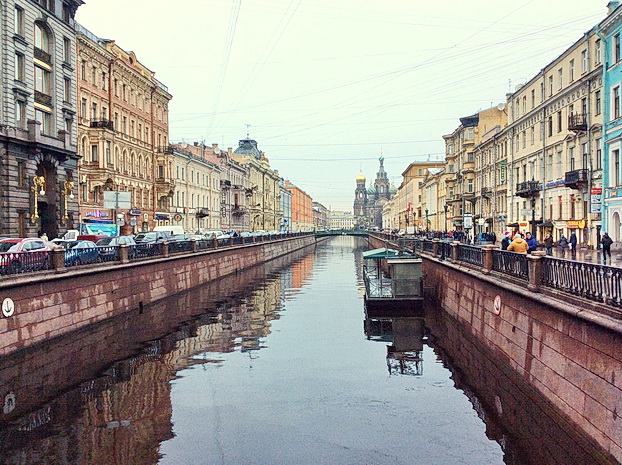
View of The Church of the Savior on Spilled Blood from in fornt of Kazan Cathedral
.

.
.

The admission ticket for The Church of the Savior on Spilled Blood
.
.

.
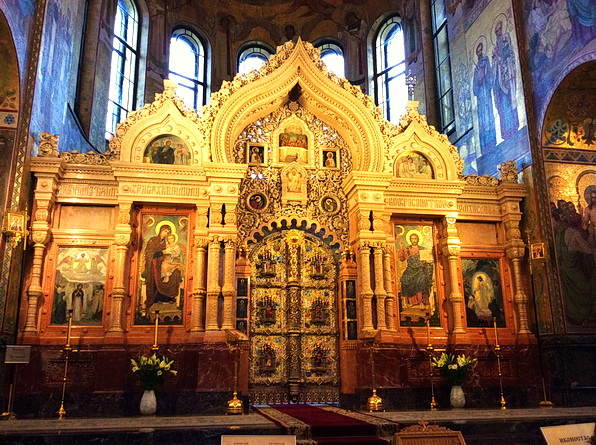
The architecture and interior artwork of the Church of the Savior on Spilled Blood
.
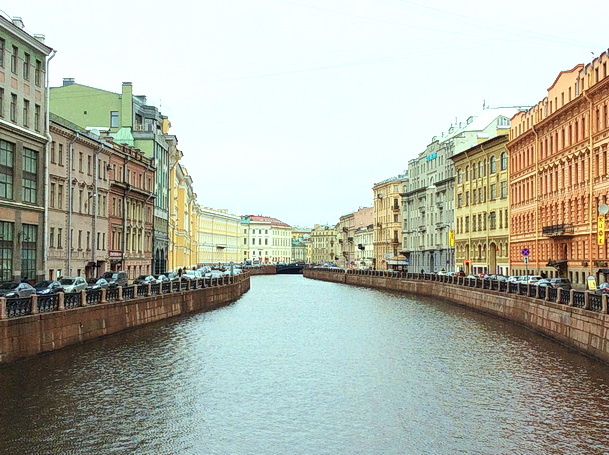
The canal in front of the Church of the Savior on Spilled Blood, the origin of the term “Venice of Russia”
.
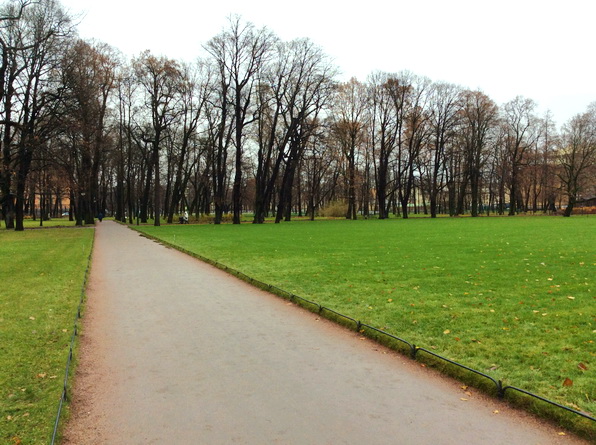
Adjacent to the Church of the Savior on Spilled Blood, there is a small public garden. The atmosphere inside the park was inviting and I couldn’t resist taking a stroll to immerse myself in its beauty. I wanted to capture the picturesque ambiance and preserve it in my collection of stunning photographs. Every detail was worth capturing. I highly recommend visiting and exploring this lovely park if you have the opportunity.
.
.
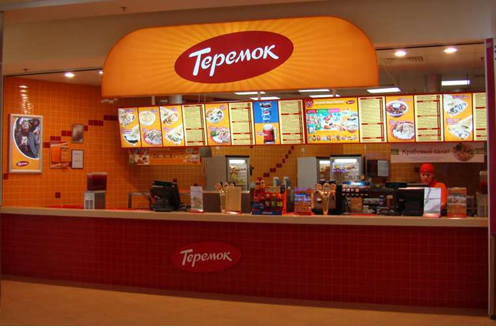
After spending time at the Church of the Savior on Spilled Blood until around 6PM. (staying until closing time seemed worth it), it was starting to get dark. I was getting hungry and thought it would be a good idea to find something to eat. There were plenty of food options in that area, but I wanted to try something Russian and not go for KFC or McDonald’s. So, I searched online and stumbled upon a local fast-food place called “Teremok (Теремок)“, which was described as a Russian-style fast-food chain that could rival Western fast-food giants like KFC or McDonald’s. Intrigued, I decided to find the nearest branch located on Nevsky Prospekt. Upon entering, I hoped to find a self-ordering kiosk with an English menu, but unfortunately, there wasn’t one. However, with the mindset of “I have to give it a try,” I made my decision and went to the counter. The menu displayed only in Russian, but when it was my turn, the friendly staff seemed to know that I am a foreigner. They immediately handed me an English menu, and I chose to order a Russian-style crepe filled with bacon cream cheese and salmon soup (I had learned that Teremok was known for their various crepe fillings, both savory and sweet, such as chocolate and banana, and they made the crepes fresh to order). The price was 300 rubles (approximately 6 USD). Overall, the taste was tasty but slightly oily, it provided good energy and was perfect for the chilly weather of Russia.
.

Russian-style crepe filled with bacon cream cheese and topped with salmon soup at Teremok
.
After feeling full, it was time for me to relax (the hotel hadn’t checked me in yet, I just left my bag there, and I haven’t taken a shower for two full days. Luckily, the cold weather helps prevent any unpleasant odors). But in the meantime, I decided to take a walk along Nevsky Prospekt to digest a bit before taking the metro line 2 (green line) for one station to go back to the hotel for check-in. (The hotel was a hostel, but I booked a private room for 1200 rubles per night, which is approximately 20 USD).

Nevsky Prospekt at Sunset time
.

The room in the hotel where I stayed was a small private room with a single bed
.
I admit that today was truly exhausting, starting from the night journey and then exploring all day. But deep down, I felt it was all worth it. St. Petersburg was so beautiful that words couldn’t do it justice. Today was one of those days where I truly felt alive and fulfilled. After returning to the hotel, I took a shower without even manage my stuffs. I fell asleep without knowing exactly when, but it was a deep and content sleep, thanks to the happiness I experienced today. I slept soundly, completely oblivious to everything. Zzzzzz
::::::::::::::::::::::::::::::::::::::::::::::::::
Written By : SHIPY SIWARIT TIASUWATTISETH
 Shipy-Ship